 Aviation, Aviators & Automobiles.
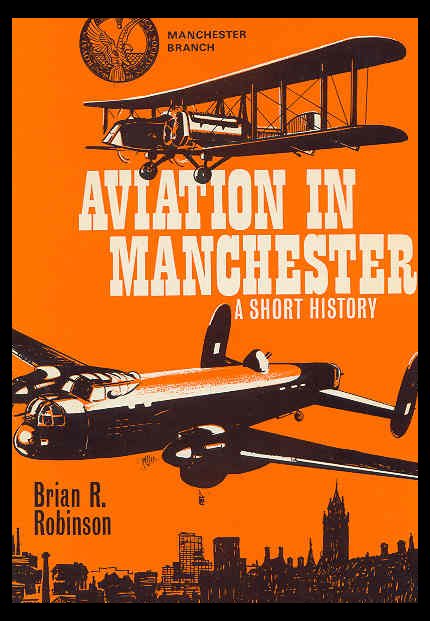
Although it would seem that Levenshulme has little connection with aviation or the world of flight, that is far from the truth. On this page I will ,hopefully, be able to tell the story of the part that Levenshulme & District has played in the history of aviation. Aviation In Manchester. A Short History I have just recently found my copy of a very interesting booklet published in 1977 by the Manchester Branch of The Royal Aeronautical Society to celebrate their 50th Anniversary. The booklet was written & researched by the late Brian R. Robinson. Brian, who was a friend, was a well known and respected local aviation historian. For many years he, and his family, lived at 25 Cromwell Grove. There are some interesting items of Levenshulme aviation history in the booklet. This is a book well worth seeking out. It was probably a fairly limited edition!
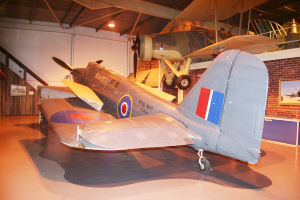
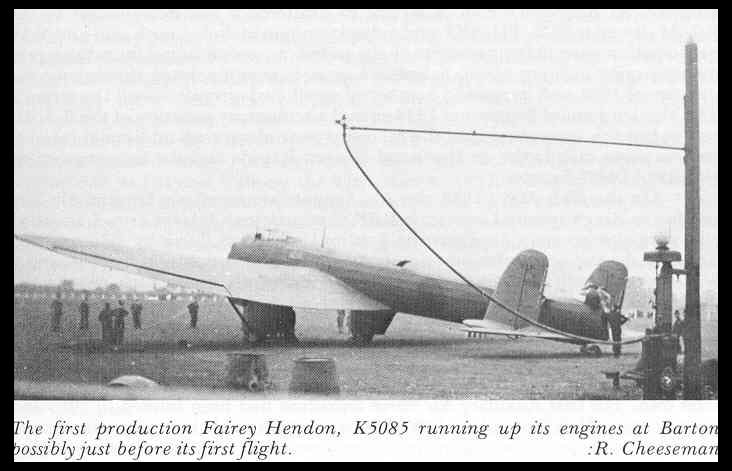
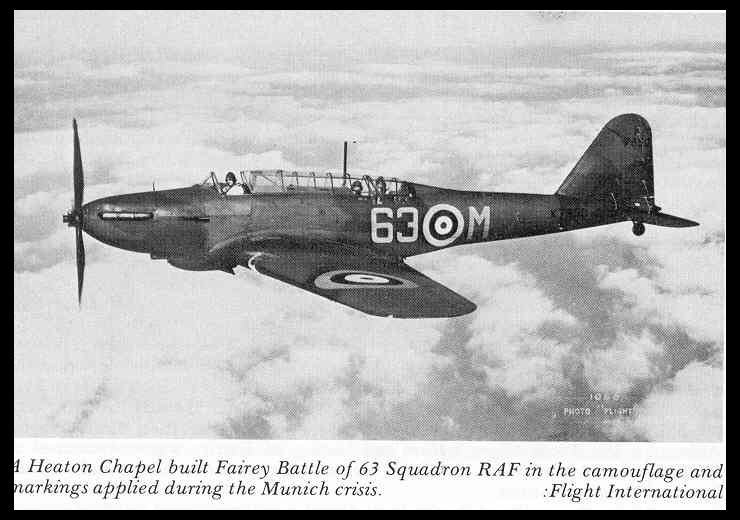
"Aviation In Manchester" contains some references to the Levenshulme area & its aviation connections. I am including a few short extracts here. If anyone can shed more light on this part of Levenshulme's history I would be interested to include the information in this section. Up until the First World War, 1914-18, Levenshulme had little connection to flight or flying machines. Some early balloon flights had passed over the area, as had several early aircraft, but no actual aircraft had landed in the vicinity. This was to change in 1917! " The Gorton firm, Crossley Bros. Ltd commenced motor car production in 1906 after already having had several years experience of building engines and by the end of 1916 had already supplied large numbers of tenders to the Royal Flying Corps, In addition, production of Beardmore & Bentley Aero engines was undertaken. Wartime expansion of production had led to the acquisition of premises at High Lane, Heaton Chapel and when, in early 1917, the decision to build three National Aircraft Factories was taken a newly formed company, Crossley Motors Ltd, was appointed to run one of them. Further land adjacent to High Lane was taken, and to give the extended lane a more pre-possessing title the City Paving Committee resolved that it should hence-forward be known as Burnham Road. This proposal stood for some months before an approach was made by Mr ( later Sir) William Letts of Crossley Motors who was concerned that Burnham might be to readily understood as " Burn 'em" and hence to be inappropriate as the address of an aircraft factory! From that time onward the lane has been Crossley Road. Contractors for the new National Aircraft Factory No 2 were H. Matthews A Sons (Builders) Ltd and work commenced in October 1917. Within nine months a 15 acre factory had been erected to standards which led Lord Weir to describe it as the finest of its class in the world and 2500 people were employed in meeting orders for de Havilland DH9 and DH10 bombers. Part of Cringle Fields park was requisitioned and, with the addition of land at its southern end, became an airfield for the testing and delivery of aircraft produced. The field was, in fact, not extensively used, although some flying did take place, and most of the aircraft made left the factory by road. The first aircraft delivered, a DH9 bearing the serial D1001, left on the 16th March 1918 and was taken to No 2 ( Northern) Aircraft Depot at Coal Aston near Sheffield after being towed to railway sidings in Broom Lane, Levenshulme." The National Aircraft Factory No 2 continued to produce aircraft at the rate of 300 per month until hostilities ceased in November 1918. After the First World War the site went over to vehicle production, turning out Crossley & Willys Overland vehicles. In 1934 Aircraft production resumed. "On the South side of the city the mid-thirties saw the arrival of a new manufacturer in the area when on the 30th November 1934, the Manchester Evening News announced that the Fairey Aviation Co. Ltd had acquired the Heaton Chapel factory which had in wartime been the National Aircraft Factory No2 and, latterly, the car body works of Willys Overland Crossley. The Director in charge was Major Thomas Barlow who had served in the Royal Naval Air Service before becoming Chief Technical Officer at the Martelsham Heath experimental centre and he set about preparing the factory to deal with large orders for the Merlin engined Fairey Battle. Before the Battle production got under way, however, 14 Hendon bombers were built and taken to Barton for testing by Flight Lieutenant Duncan Menzies. The Hendon was a cumbersome twin engined aircraft with two Rolls-Royce Kestrels and rapid development of more advanced bombers led to the cancellation of orders for further aircraft. The Hendons produced all went to 38 Squadron at Mildenhall, although some were borrowed briefly by 115 Squadron at Marham. The first Battle from Heaton Chapel, K7558, was test-flown at Barton by Lieutenant Menzies on the 14th April 1937 and deliveries to the RAFs 63 Squadron at Upwood commenced on the 20th May. Twenty one aircraft were flown at Barton before testing was transferred to the first available section of the new aerodrome at Ringway. The lease of land there had been agreed on the 11th March 1936,and by 2nd June 1937 the hangar was opened by the then Lord Mayor, Alderman Joe Toole." The opening of Fairey Aviations factory at Heaton Chapel was far sighted as the War clouds gathered over Europe in the late 1930s. When war was declared against Nazi Germany on September 3rd 1939, Fairey Aviation was poised to be at the forefront of aircraft production. " At Heaton Chapel the Fairey Aviation Co Ltd commenced the war with the Battle single-engined bomber in full production and it was a Battle from that factory which scored Britains first "kill" of the war when the gunner of K9293 shot down a Messerschmitt Bf 109 over Northern France. The Battle was, however, too vulnerable to survive the company of the fighters of the day and was diverted to the training role with several aircraft giving stalwart service as flying test-beds for a variety of engines. 1,171 were built at Stockport, including 16 supplied to the Belgian Air Force, before production ceased in 1942 by which time the fleet fighter Fairey Fulmar was on the assembly lines. The first Fulmar, N1854, flew at Ringway on the 4th January 1940 after the design had been evolved from the single Fairey P4/34 by Heaton Chapel design staff and of over 600 of the type built, that aircraft is today the only survivor, having been retained by Faireys and subsequently placed in the Fleet Air Arm Museum at Yeovilton. . Whilst Fulmar production was building up, the factory received & reconditioned 100 Swordfish biplanes. From the initial factory and a single small hangar at Ringway, the Fairey Aviation Co rapidly expanded its northern organisation. New assembly sheds were built at Ringway, the Burtonwood Repair Depot was managed for the Ministry of Aircraft Production until the United States Army Air Force took over in 1943 and ancillary and repair plants established including works at Warrington, Stretton, Reddish and the requisitioned bus depot at Parrs Wood. In addition, The Crossley Motors works between the original Fairey factory and the Manchester to Stockport railway line was taken over as a Government "shadow factory" and, under Fairey management, commenced construction on Bristol Beaufighter night fighters. The first Beaufighter left the lines in January 1941 and 500 were built before the Errwood Park Works moved on to the building of Handley Page Halifax heavy bombers. despite the pre-eminence of the Lancaster, it should not be forgotten that the Halifax made a major contribution to the effectiveness of Bomber Commands operations and over 660 were delivered to the Royal Air Force after test flying at Ringway. In the later years of the war the Heaton Chapel factory was responsible for providing the Fleet Air Arm with over 1000 Barracuda torpedo/ dive bombers. Ungainly in appearance, the Barracuda carried a wide variety of external stores for delivery to the enemy and, as well as carrying out many anti-submarine patrols from escort carriers, the type was used for wide-ranging anti-shipping attacks, the mot spectacular being a successful raid on the German battleship " Tirpitz" on the 3rd April 1944. Barracudas also carried the war to the Japanese from the aircraft carriers of the British Pacific Fleet. As Barracuda production was run down, large numbers of Fairey Firefly general purpose fleet fighters commenced to flow from the factory and the Firefly was succeeded by the Gannet which served the Fleet Air Arm for many years as a Search & strike aircraft. Large numbers of Fireflash beam riding air to air missiles were also produced at Heaton Chapel. Aircraft production ceased at Heaton Chapel in the early 1960s, but Fairey continued to rebuild and service aircraft at its Ringway sheds into the 1970s. The above history has been extracted from " Aviation in Manchester" by Brian R. Robinson, and was written in 1977. Over the intervening years more information on Fairey Aviation at Heaton Chapel has probably come to light. I will endeavor to update this history at a future time.
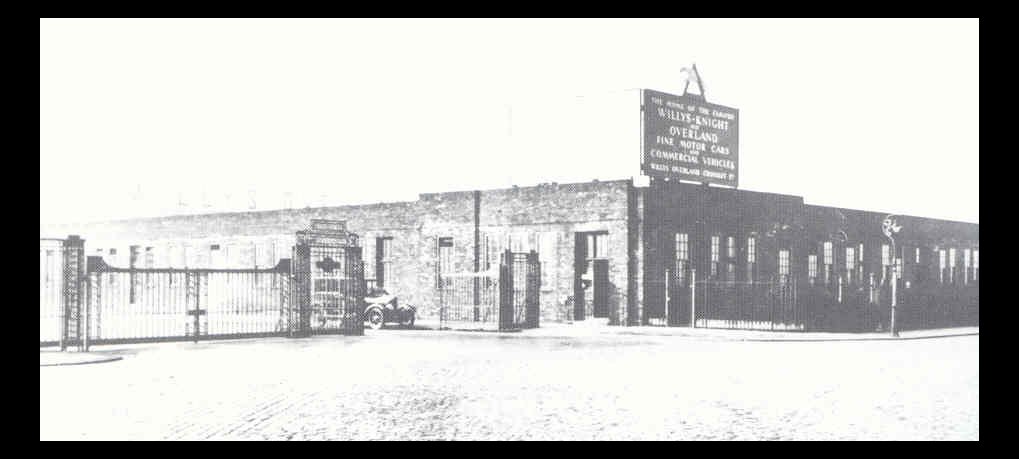
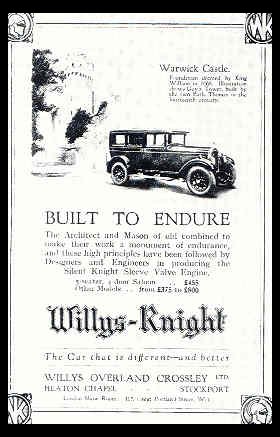
Fairey Aviation, Errwood Works, Crossley Road The most concrete connection to aviation in Levenshulme was the factory owned by Fairey Aviation, which stood on Crossley Road, adjacent to Cringle Fields. Technically this factory was located in Heaton Chapel, Stockport, but much of its labour force probably came from the South Manchester area. Eventually I hope to be able to relate more of the history of Fairey Aviation and its aircraft, especially those built at the Heaton Chapel factory and flown from Ringway, where Fairey had Assembly & Flight sheds.( See Above) The Factory at Crossley Road was originally built for Crossley Motors, who built Commercial vehicles & Willys Overland cars. Eventually Fairey Aviation took over & expanded the factory before the Second World War. In the late 1930's they were building the Fairey Battle light bomber, but went on to build many other types until the 1950's. There may still be some locally built Fairey aircraft preserved in museums, or even still flying. I hope to be able to track these aircraft and provide illustrations in due course. . The above photo shows the Fairey Aviation factory, on Crossley Road, when it was still owned by Willys-Knight & Overland. Willys -Knight & Overland were an American automobile company who eventually went on to manufacture the famous Willys Jeep. The poster is from 1928, and shows the type of vehicle produced at Errwood Park Works.
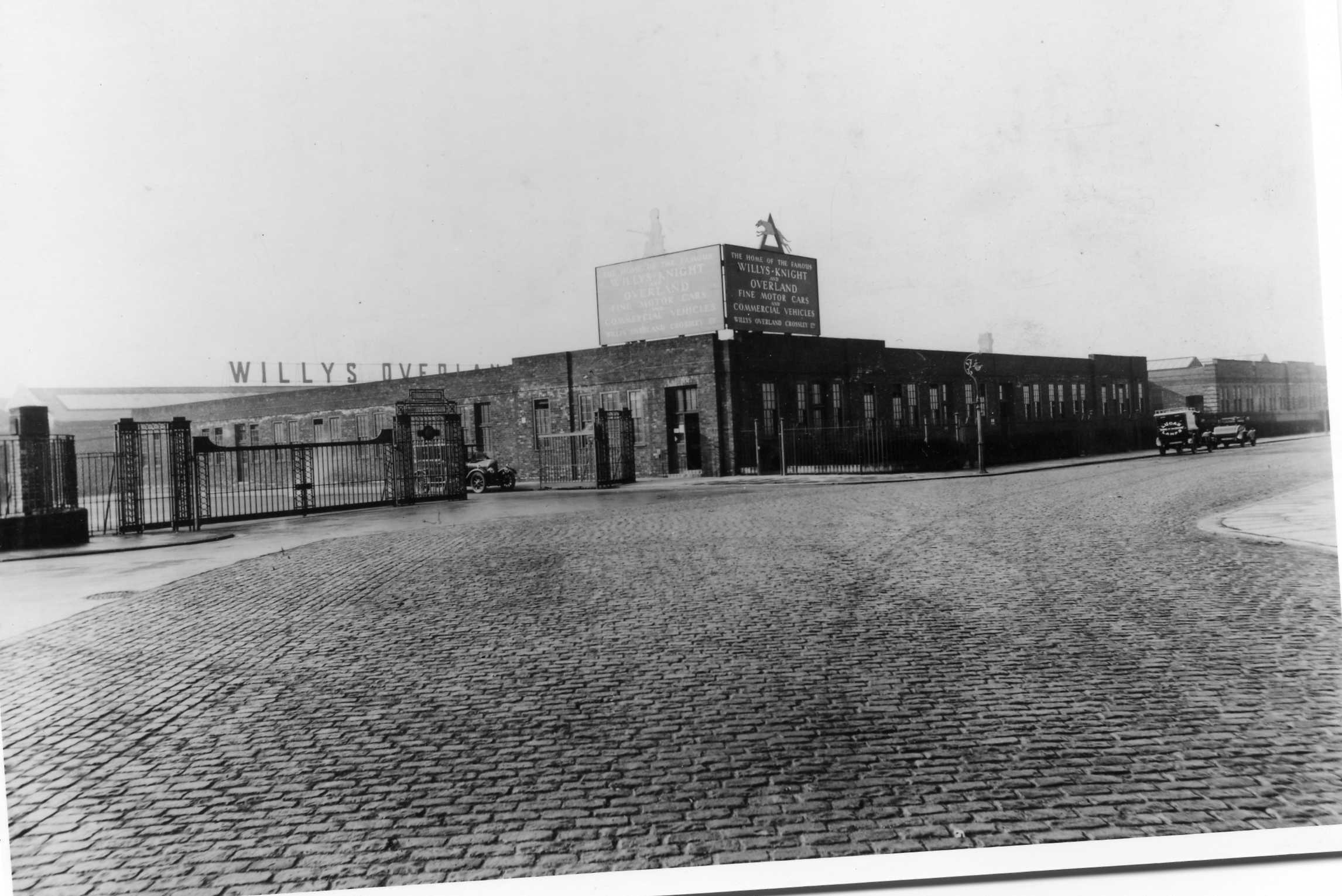
This is a slightly clearer photo of the famous gates of the Willys Overland Crossley factory on Crossley Road in the 1920s. Note the cobblestones. ( via Malcolm Asquith) Update:-I have recently been contacted by Roy Chapman, The C.O. of 1940 Squadron ATC that he owns the staff entrance gates from Fairey Aviation as shown in the above image. He wanted to keep them in Levenshulme by re-erecting them in the ATC compound. Unfortunately he could not get planning permission, so he has offered them as a donation to the Manchester Museum Of Science and Industry. June 2010.
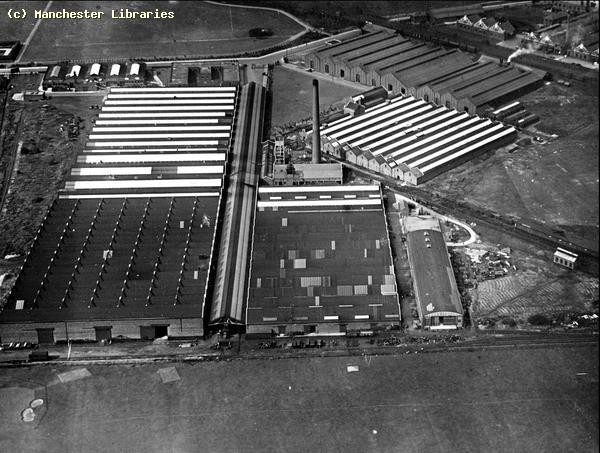
This aerial photo shows the Crossley Road, Crossley Motors site in 1930. A substantial part of these buildings still exist in 2009. It looks like a great deal of new building is happening in this photo. ( Manchester Libraries)
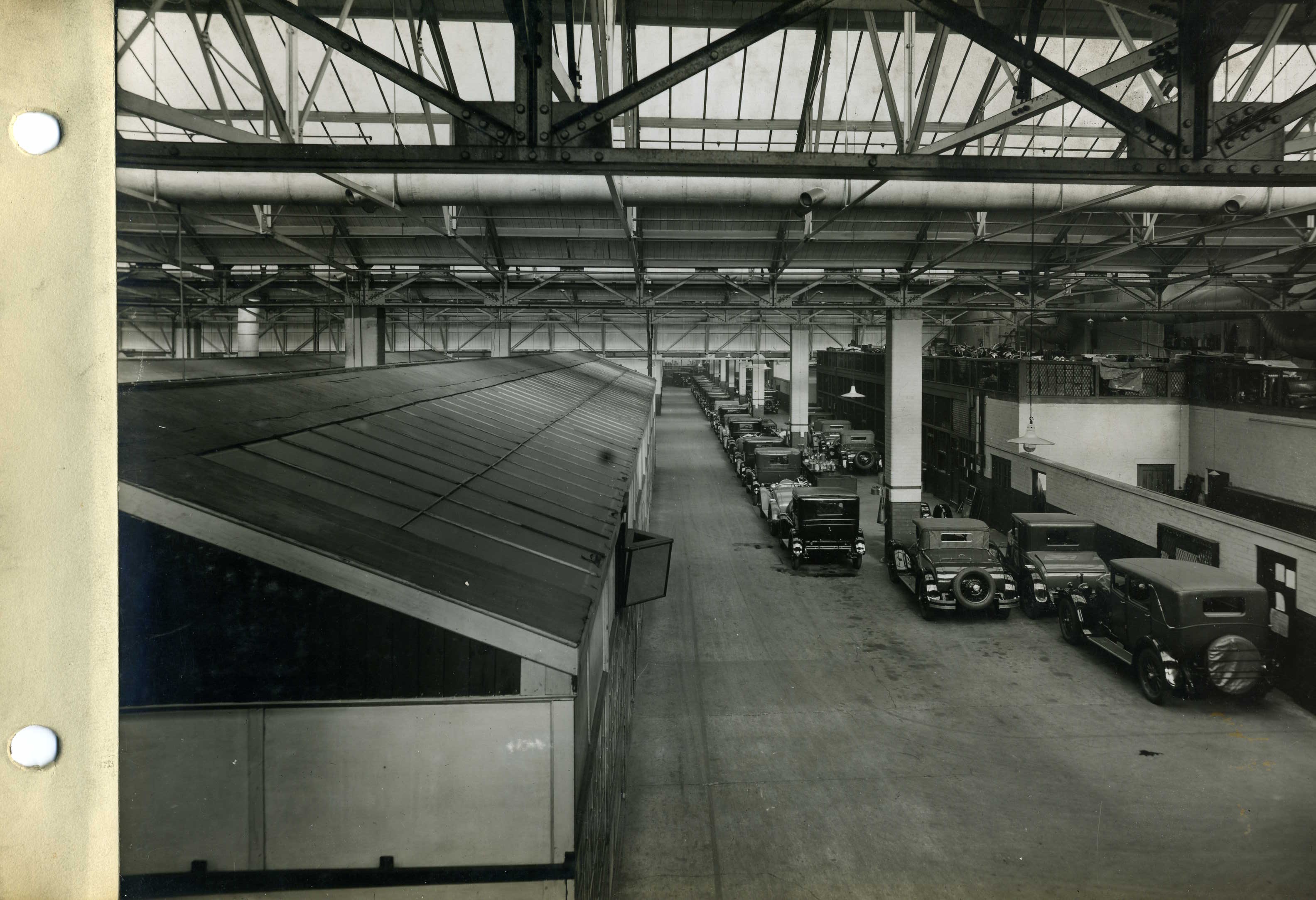
Inside the factory 1920s. These finished cars are waiting to leave the factory for delivery. ( via Malcolm Asquith)
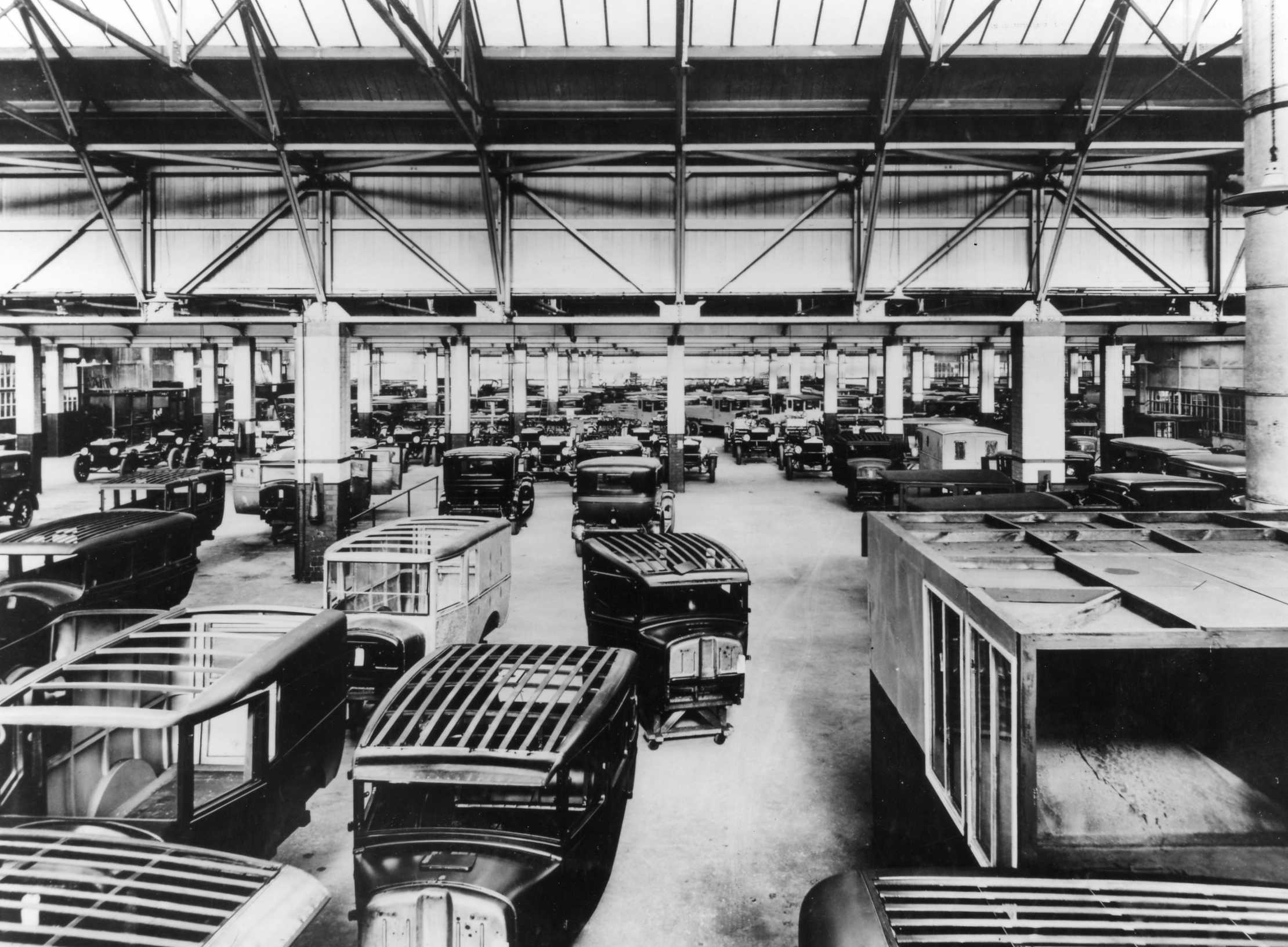
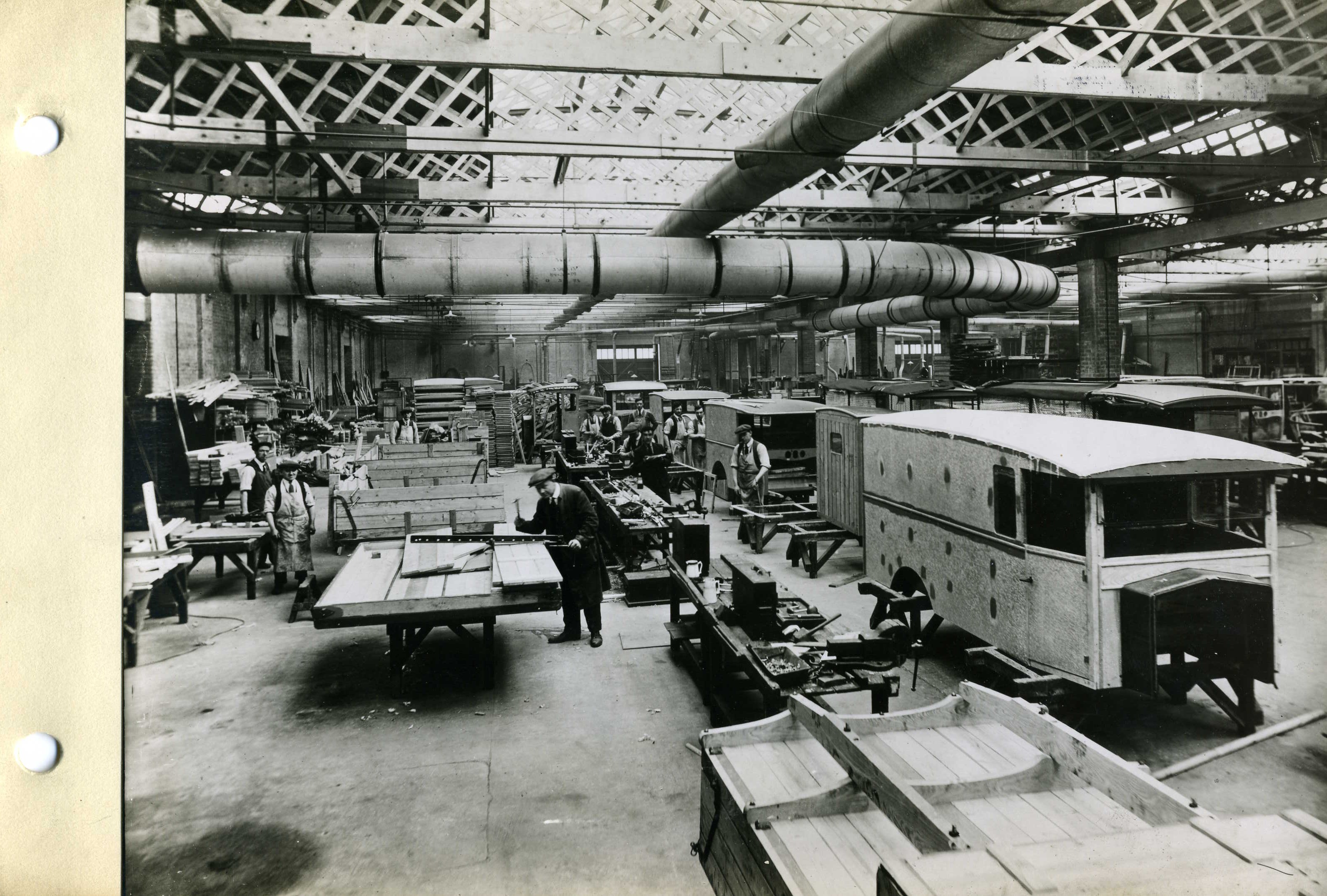
Inside the factory, both Commercial vehicles and private cars in various stages of construction. This was the age of coachbuilding using many differant materials and skills. ( via Malcolm Asquith)
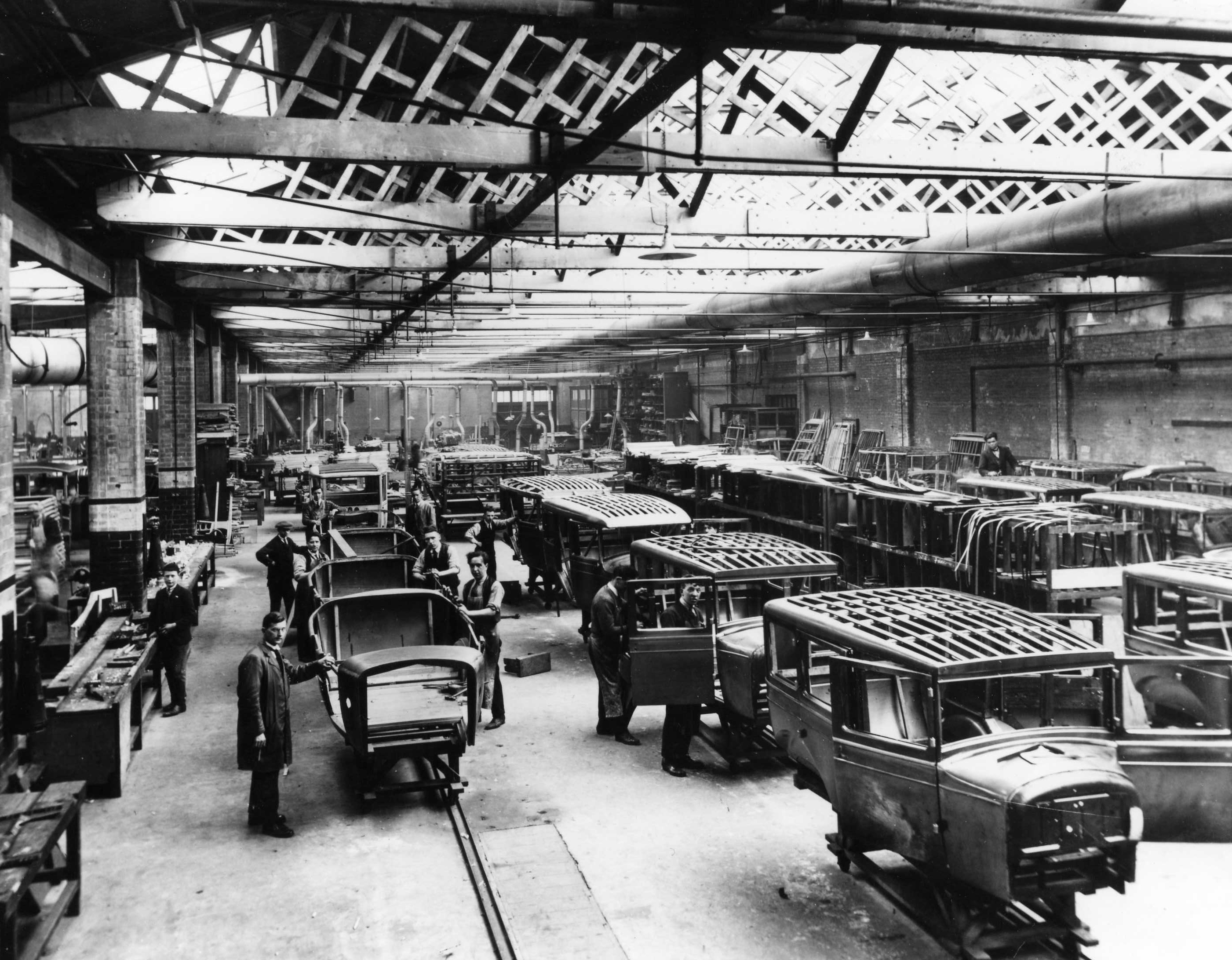
Inside the coachbuilding shop. Note the rail on the floor, early production line technique! Also the airy and light working conditions. (via Malcolm Asquith)
Various Commercial bodies being constructed. These are mostly made of wood. ( via Malcolm Asquith)
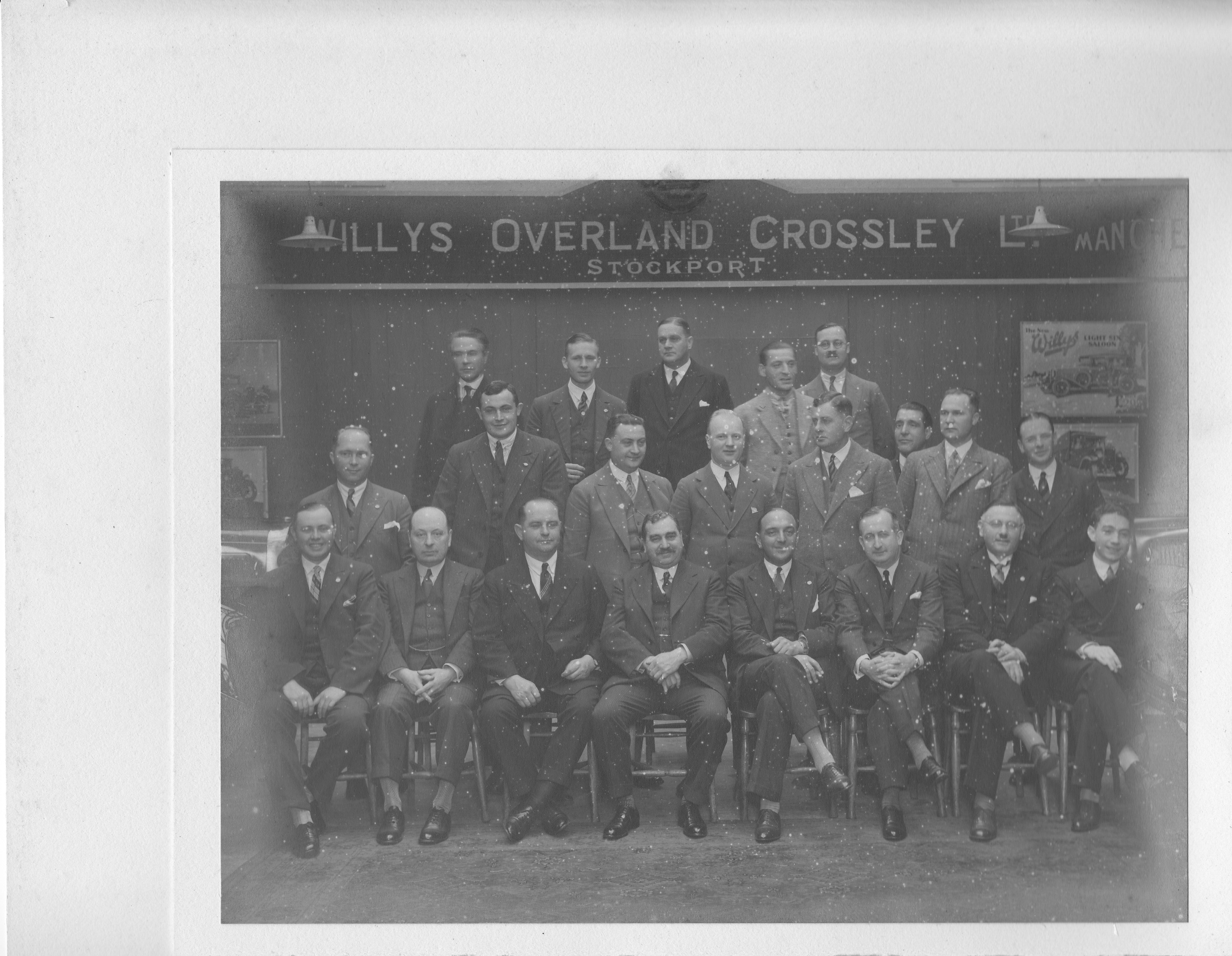
The above photo was sent to me recently, February 2010, by a Dutch correspondent Anton Haspels. His brother had found the photo in the UK, and had it framed. He presented it to Anton as a birthday gift. Anton has an interest in Military Vehicles, and actually has restored and collected a few. He has a Willys Jeep! Hence his interest in Willys Overland. The photo appears to show the directors and management of the Heaton Chapel factory. Note the sign shows both Stockport and Manchester. There is no date, but I would guess late 1920s, or early 1930s. ( Photo via Anton Haspels) Willys Overland Crossley Advertising
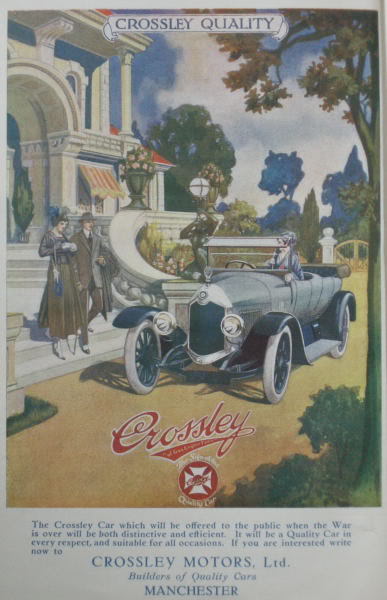
A Crossley Motors advertisement early 1920s. Obviously targetting the "upper crust"!
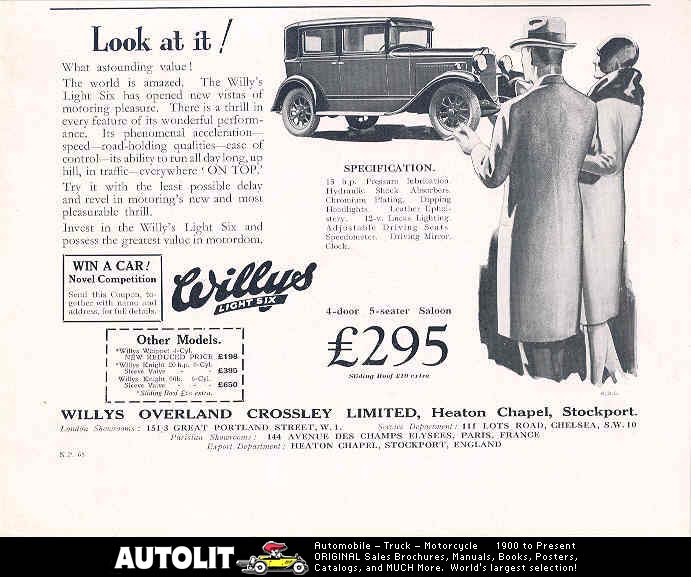
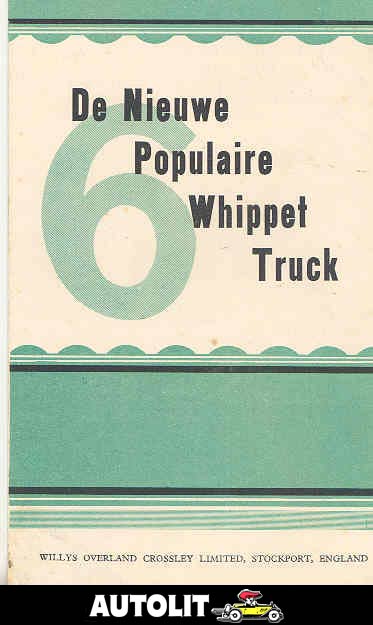
The two posters above were sent to me by Anton Haspels The second image looks like it came from a Dutch Brochure. ( via Anton Haspels)
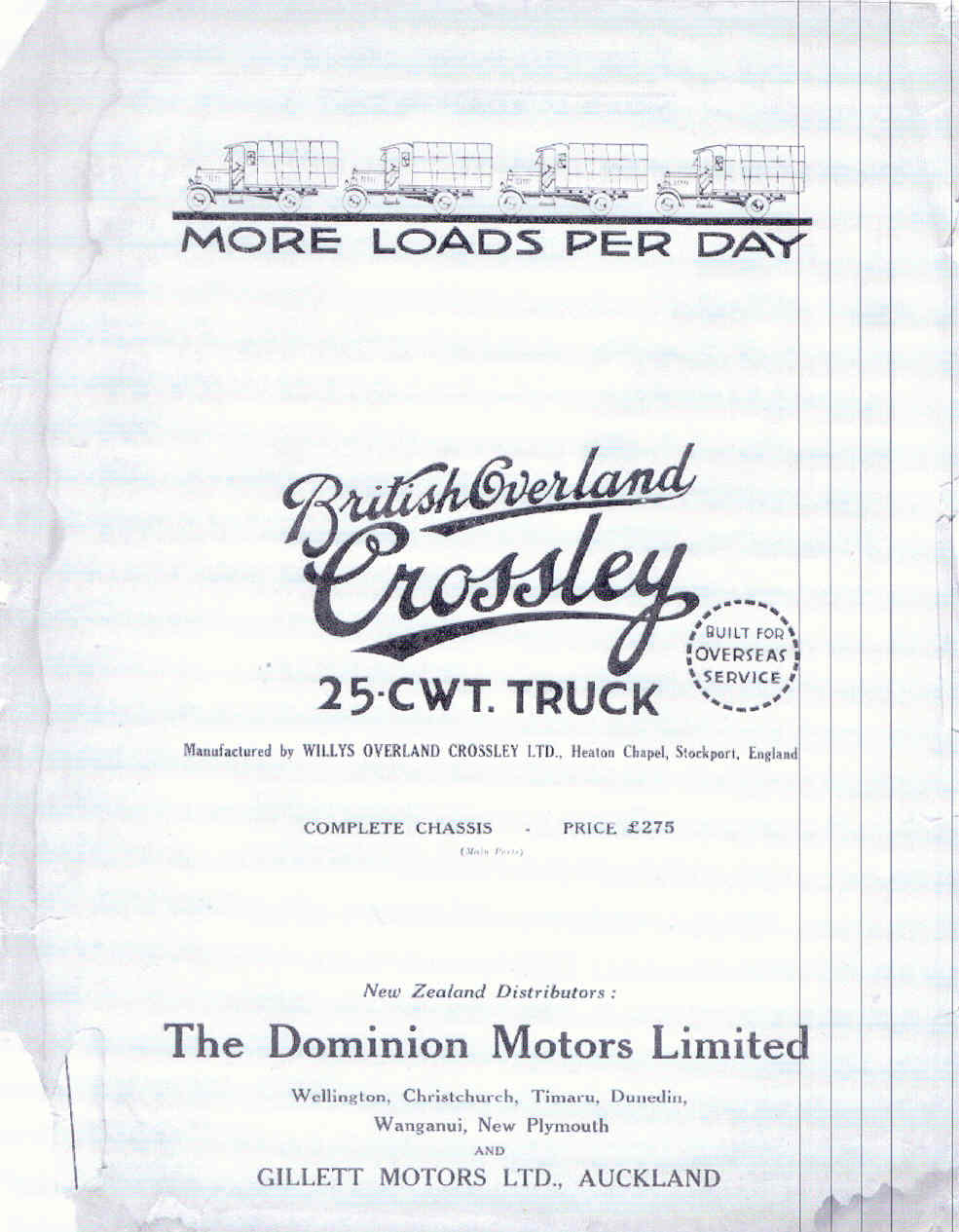
This is the cover of a brochure advertising the British Overland Crossley 25CWT Truck. This may have been printed for the New Zealand market. Note the Heaton Chapel address on the brochure (via Anton Haspels) Fairey Aviation, Errwood Park Works. 1934 to 1960
Fairey Aviation Company Logos The history of the Fairey Aviation site is quite interesting. It dates back to 1917 when the site was managed by Crossley Motors. The site was known as National Aircraft Factory No.2. Here were built DH 9 bombers for the Royal Flying Corps. The assembly sheds/hangers may have been of a temporary nature. It is thought that at least one of these Belfast Truss hangers from this site still exists at Barton Airfield, near Trafford Park. The aircraft were apparently moved from the site by rail, and a spur & sidings did exist at the Errwood Park Works. What is not clear is if any aircraft were flown from this site, which was mainly green fields at this time.
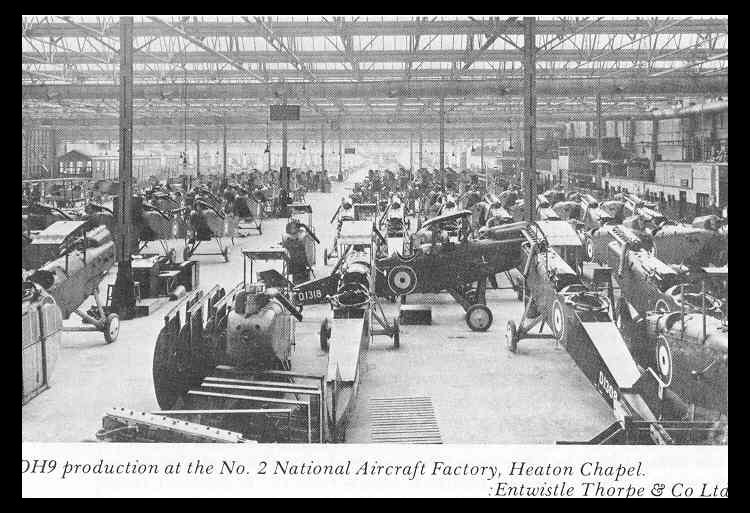
The above photo shows DH 9 aircraft production at the Heaton Chapel site during the First World War. ( via Aviation In Manchester)
After World War One the site was purchased outright by Crossley Motors and cars were produced there until 1934. In November 1934 Fairey Aviation bought the factory & expanded it. The first aircraft built were Fairey Hendon night bombers. This aircraft was followed on the assembly lines by the Fairey Battle. The bulk of Battle production was from Errwood Works. This was followed by the Fairey Fulmar, Fairey Barracuda and Fairey Firefly. The factory was expanded during this period and sub-assembly work was carried out on Handley Page Halifaxes & Bristol Beaufighters. At the peak of wartime production Fairey Aviation & its "shadow factories" employed over 16,000 workers, of which the majority were female. Fairey Aviation At War Fairey Aviation was a major supplier of aircraft to the RAF & the Fleet Air Arm during World War Two. Besides building its own designs it also sub- contracted for other companies such as Handley Page, Bristol & Avro. The Factory was a key component of the War Effort, and as such needed to be defended. The factory was camouflaged & had anti-aircraft defences & armed guards.
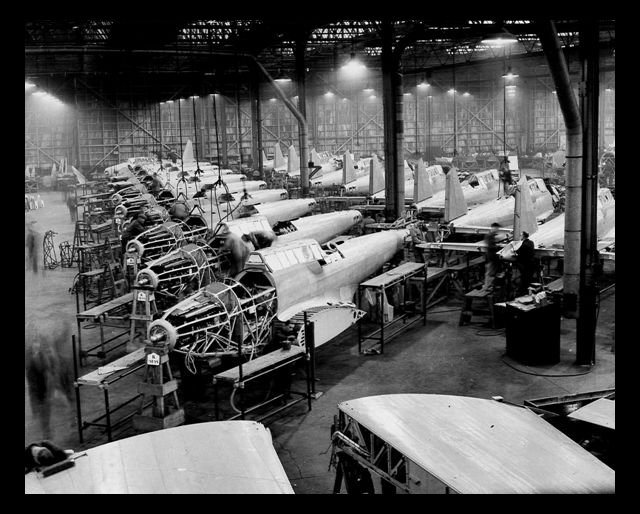
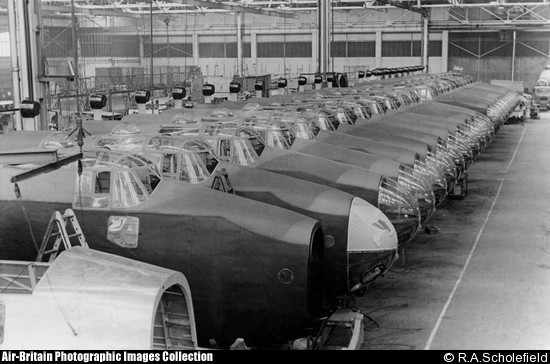
Fairey Battle Production line circa 1940.There are at least 19 airframes in this photograph, which is a timed exposure. Note the shadowy figures! ( Photograph via Ken Musgrave)
The Bristol Beaufighter production line in 1941. Five aircraft are evident in this photograph, and it would appear that virtually complete aircraft were produced. The Beaufighter was a potent aircraft, and was used for low level strikes on enemy ground targets & surface ships. The Beaufighter was still in service with the RAF in the 1950s. Fairey Aviation produced 500 of these aircraft. ( Photo via Ken Musgrave).See Fairey Survivors below!!
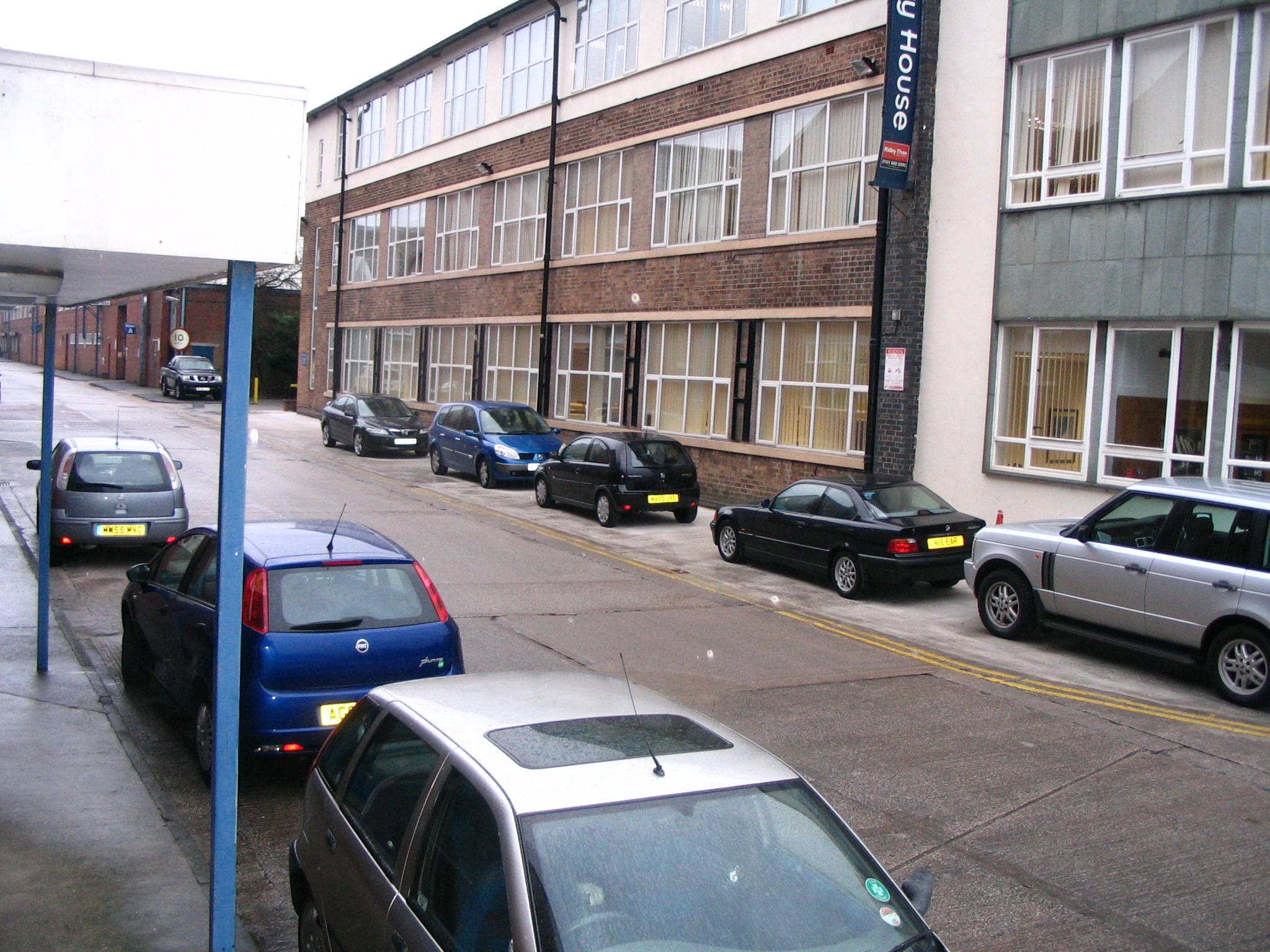
Another great wartime photograph taken at Fairey Aviation during wartime. The picture shows a Handley Page Halifax Mk 1, loaded onto lorries & waiting to leave the factory. The Halifax was a large four engined heavy bomber & over 660 of these planes were built at Heaton Chapel. They were taken to Ringway for assembly & test flying. Note the two major fuselage sections, and also the other trucks carrying the wings & tailplanes. Possibly taken in 1941.Also note the camouflage on the office building. ( Photo via Ken Musgrave)
The above couple of photos show the same area where the Halifax was photographed. It is very obvious that the office building, Discovery House, has gained a third storey since the Second World War. All of the buildings in the photo still exist in 2007.
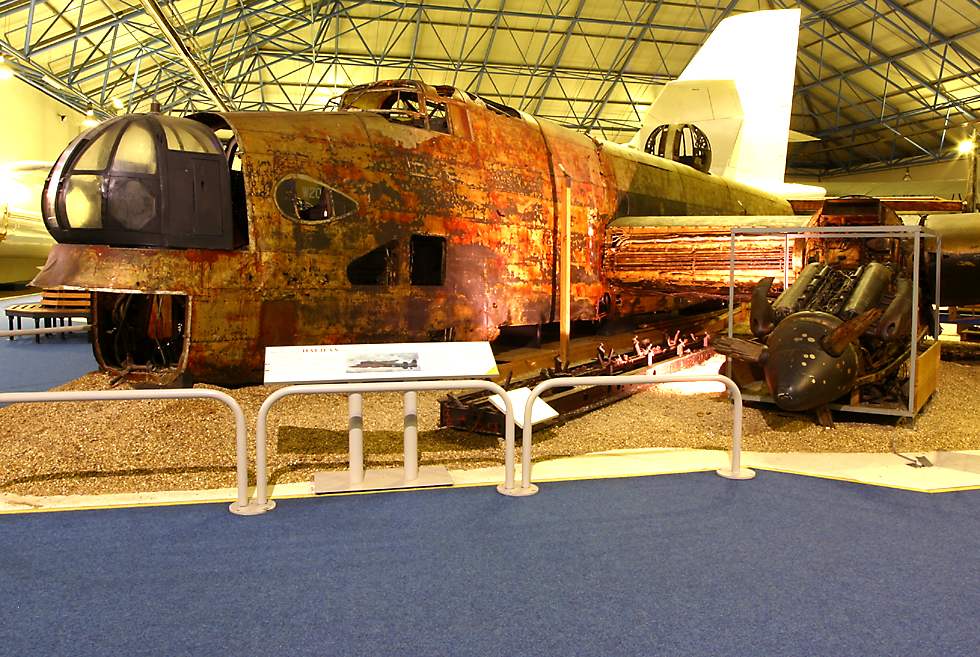
This photo shows the remains of a Halifax Mk1 bomber recovered from a fjord in Norway in the 1970s. The aircraft was one of several Halifax's that crash landed on frozen fjords or lakes and thus survived to be recovered. This aircraft has been kept in its "as found" state, and is exhibited at the RAF Museum, Hendon, London. Where was this particular aircraft built? Could it be a Heaton Chapel aircraft?
This photo shows the last of the Fairey Aviation built Halifaxes. In total 661 aircraft were built. Photo is dated 5th October 1945, taken at Ringway Airport , Manchester. ( via Fairey Aviation)
This photo shows Halifax B Mk 111 forward fuselages at the Fairey Errwood Park works, 24 February 1944. ( photo via Fairey Aviation)
Fairey Barracuda production line in 1944. This high -winged naval dive bomber was probably the largest aircraft flown off Royal Navy aircraft carriers during the Second World War. ( Photo via Ken Musgrave)
Fairey Barracuda shown in post WW2 colour scheme.
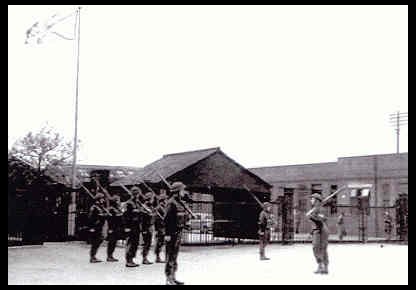
Home Guard Drilling at the Main Gate on Crossley Road. The photograph is undated, but is probably later in the Second World War as soldiers have uniforms & weapons. Did Faireys have their own Home Guard unit? ( Photo via Ken Musgrave).
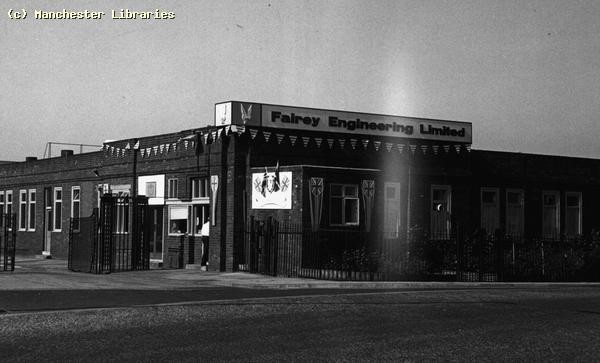
The Fairey Engineering main gate in 1977, decorated for the Queens Silver Jubilee. Compare to the above and below views. ( Manchester Libraries).
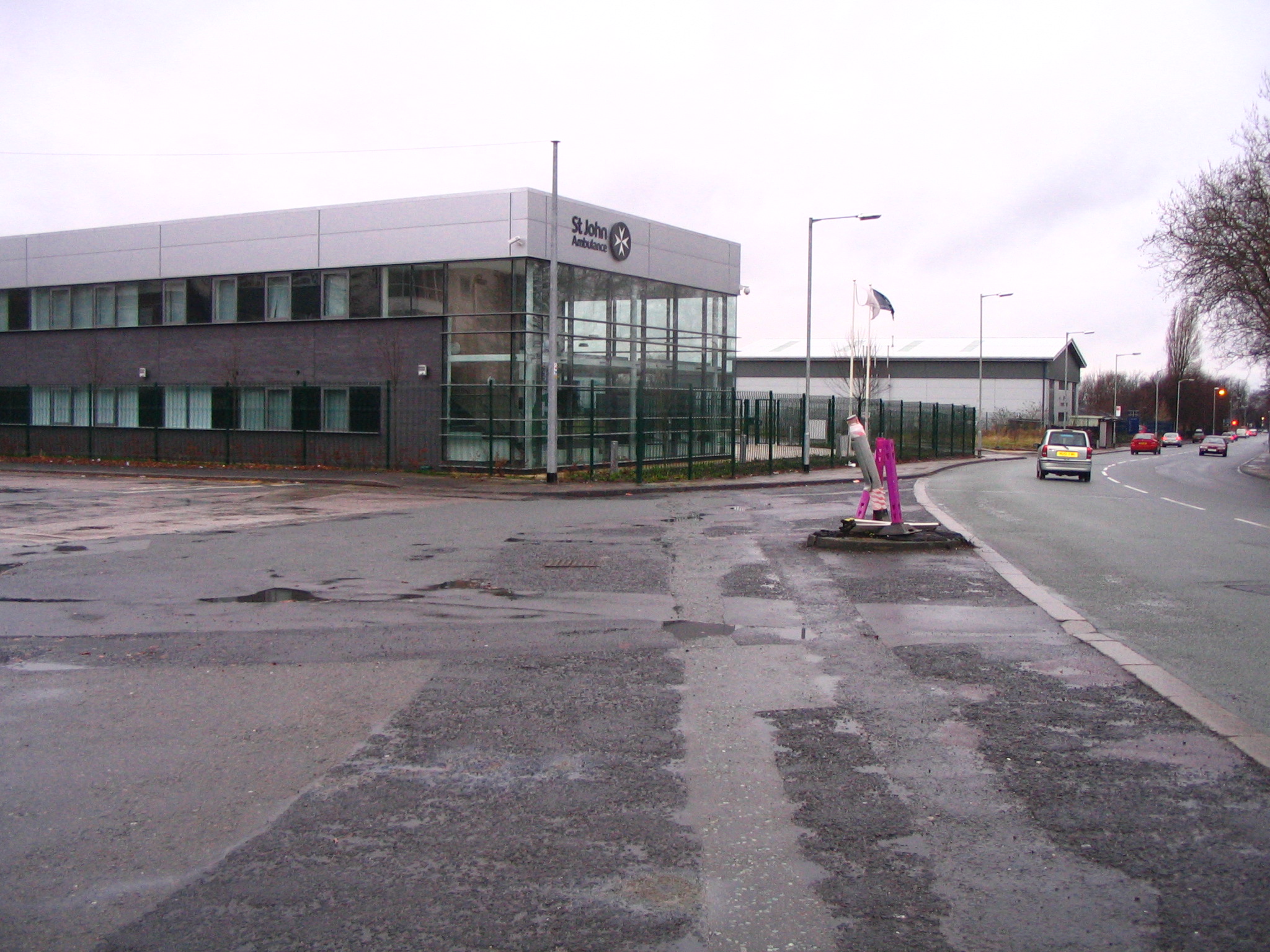
The same corner in December 2007. All the original Fairey Aviation office building have been demolished.. The building on the corner is the headquarters of The Saint Johns Ambulance Brigade.
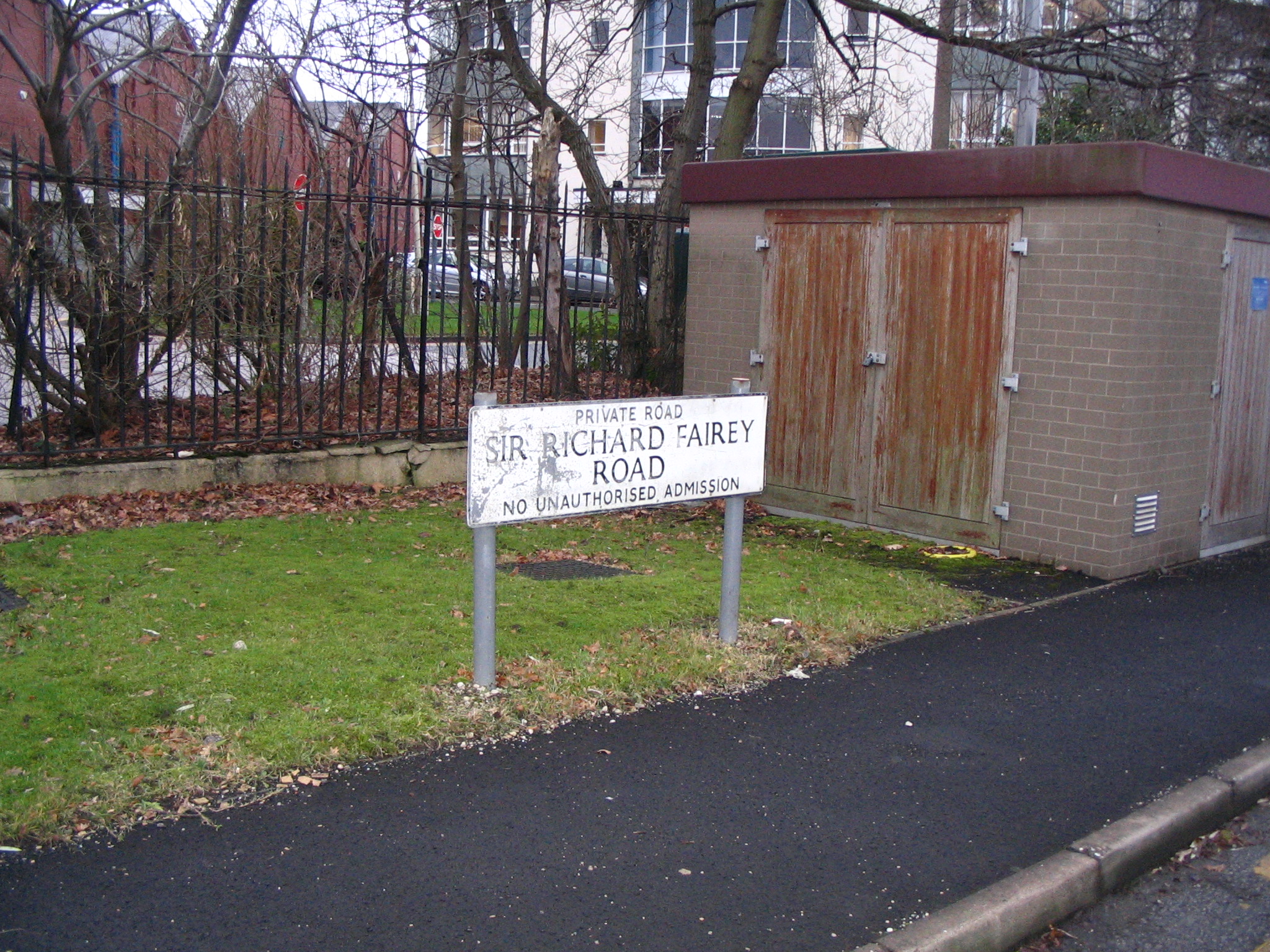
The only tangible evidence that this site has a link to the great Fairey Aviation Company. When was this road named? It would be nice to see a "blue" plaque or some more significant memorial to the part this site played in the two world wars.
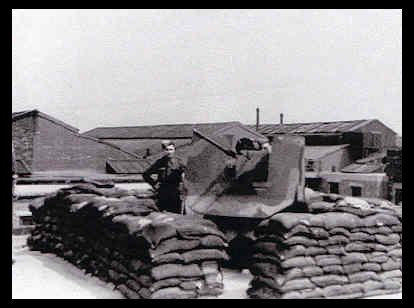
A great photo of a light anti-aircraft gun situated on the roof of the fire station at Fairey Aviation, Heaton Chapel. The fire station was situated on the Cringle Fields side of Faireys. Note sandbags,& camouflage on the gun shield. The gun is a single barreled weapon, possibly 37mm. ( Photo Via Ken Musgrave)
Another photograph of anti-aircraft defences at Fairey Avition. The gun is a 20mm Hispano aircraft cannon. Here being used for defence of the factory. The location looks to be on the west side of the factory, possibly beside Cringle Fields. Ken Musgrave believes that this could be the same gun as the preceeding photo with the addition of a factory produced gun shield( Photo via Ken Musgrave ).
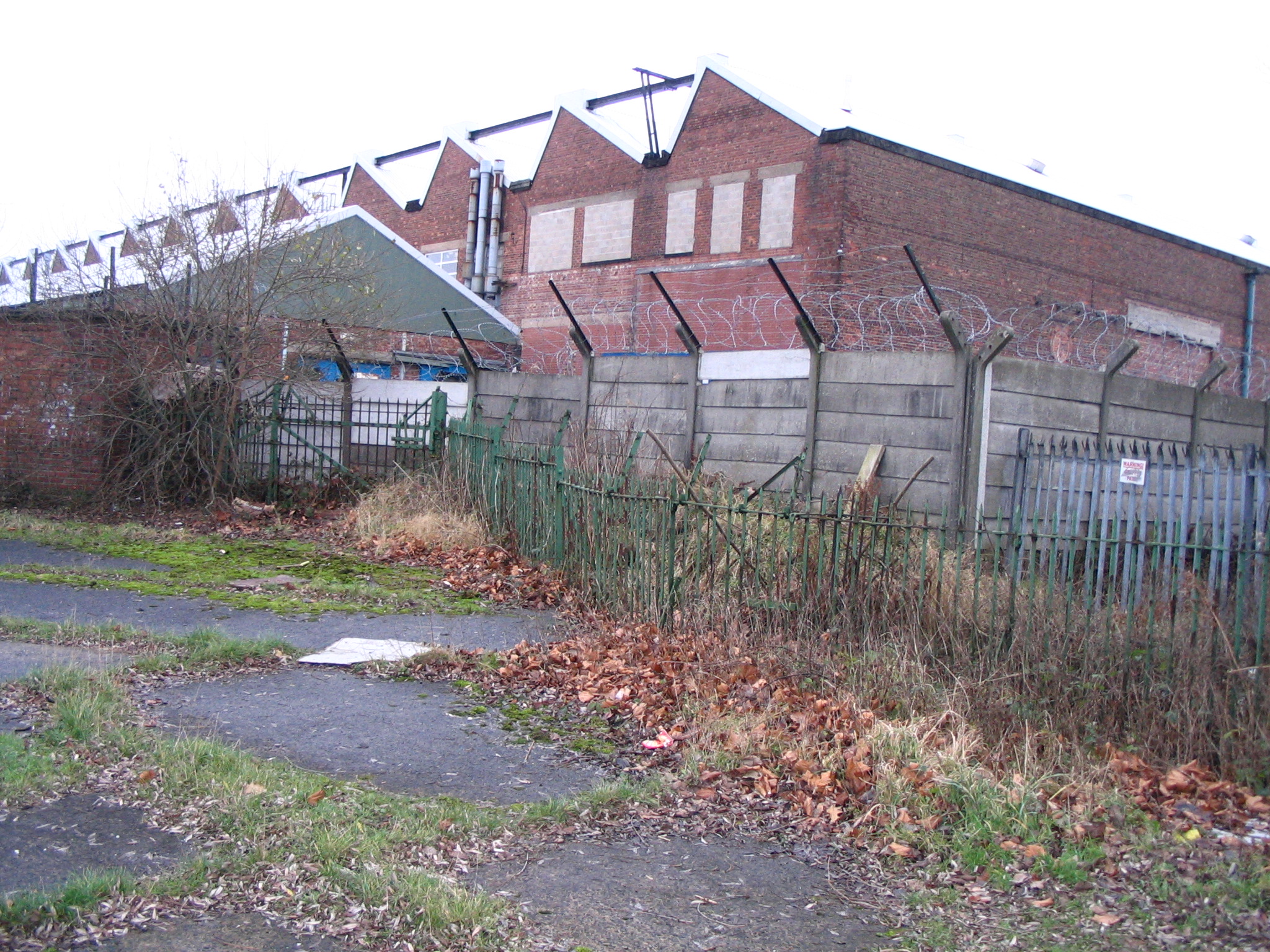
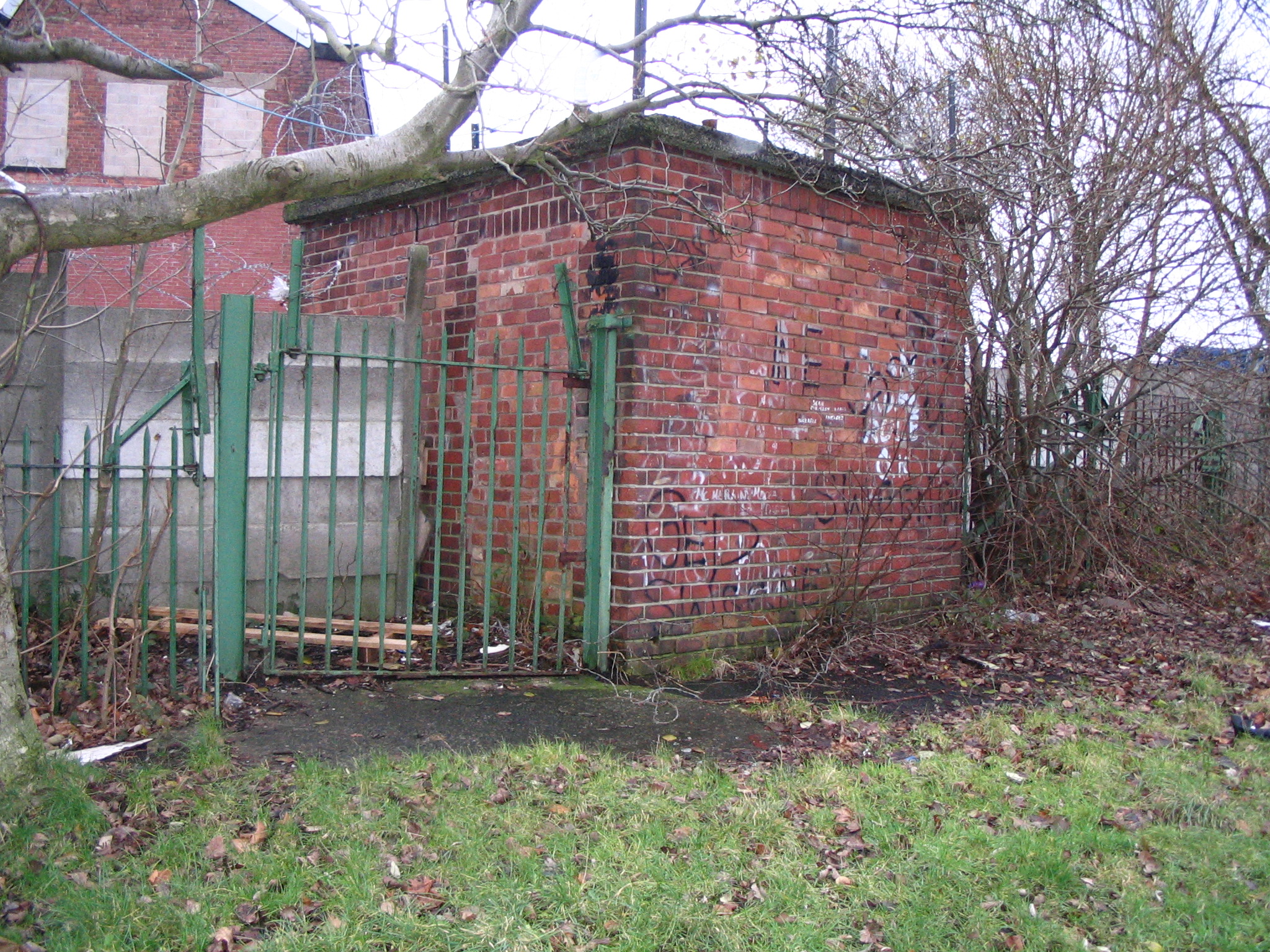
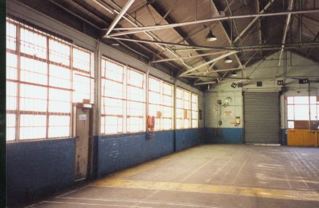
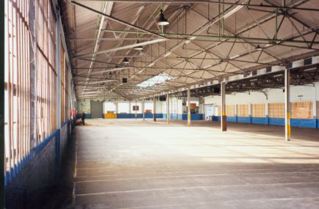
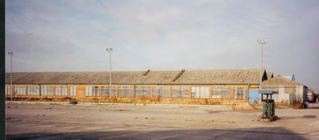
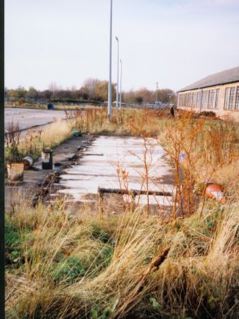
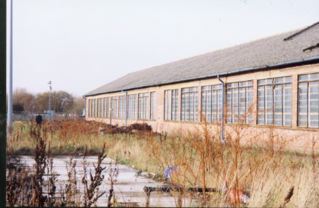
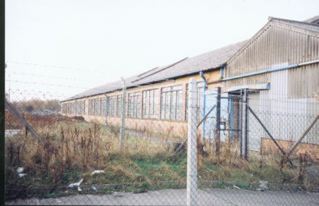
The above photos were taken at the side of the former Fairey Aviation factory in December 2007. This is the side facing Cringle Fields . The old factory buildings are still in existence. The second photos shows what appears to be a small surface Air Raid Shelter. Note the fencing seems to be similar to the anti-aircraft photo above, and could almost be in the same location!
The above photograph shows a very basic looking armoured car, possibly produced by Fairey's as a civil defence vehicle. It looks somewhat similar to the Humber Beaverette. Does anyone have any information on this vehicle? It may only have been a one-off prototype! ( photo via Ken Musgrave) Fairey Aircraft built at Heaton Chapel
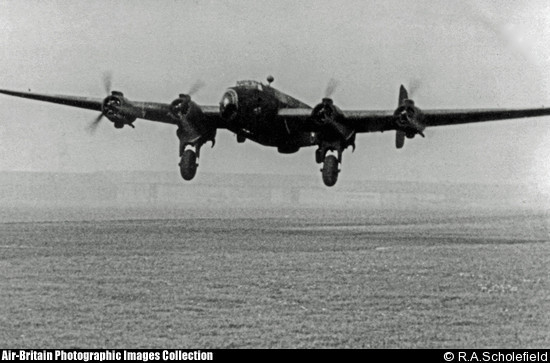
Fairey Hendon production line, Heaton Chapel 1935?
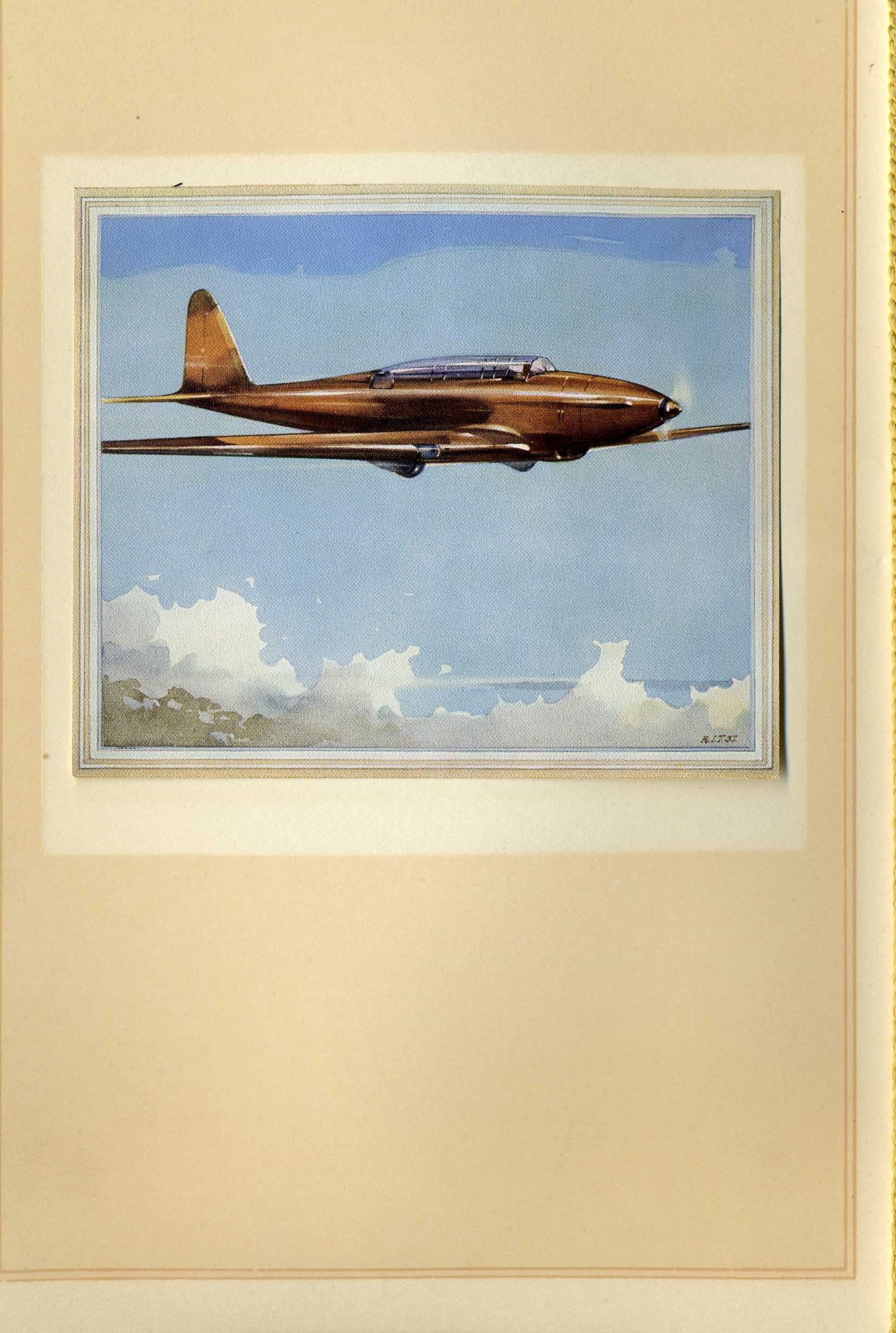
A Fairey Hendon in flight. This is probably a cigarette card illustration. Already an obsolete aircraft by the start of WW2. Some were used for training purposes, but would have all been scrapped before the war ended.
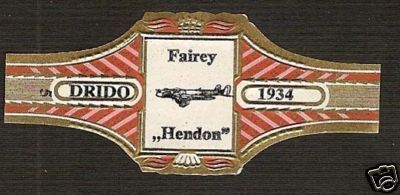
A "curious" item found on Ebay. This is a cigar band illustrating the Fairey Hendon! Were these cigars commissioned by Fairey Aviation, or is this just a modern day curiosity? Drido would appear to be the manufacturer, and 1934 the first flight of the Hendon bomber!!
Fairey Battle pre-war colours. From a cigarette card.
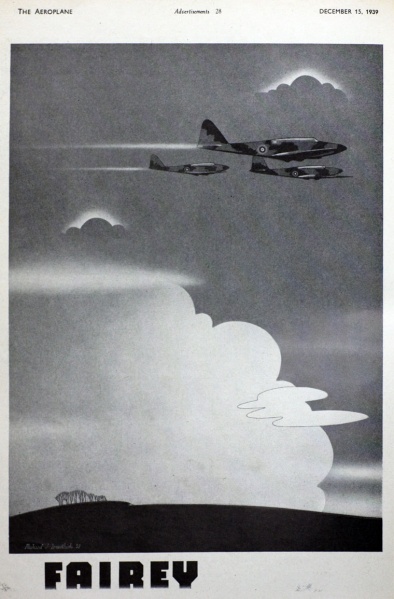
A very nice stylized advert for the Fairey Battle from the "Aeroplane" magazine. Dated December 1939, 3 months after the outbreak of World War 2. May and June 1940 would prove the Fairey Battle to be an inadequate machine for modern warfare! ( via Brian Carter)
Fairey Barracuda DP855/G at Ringway February 1944. ( The above photos are taken from Aviation In Manchester)
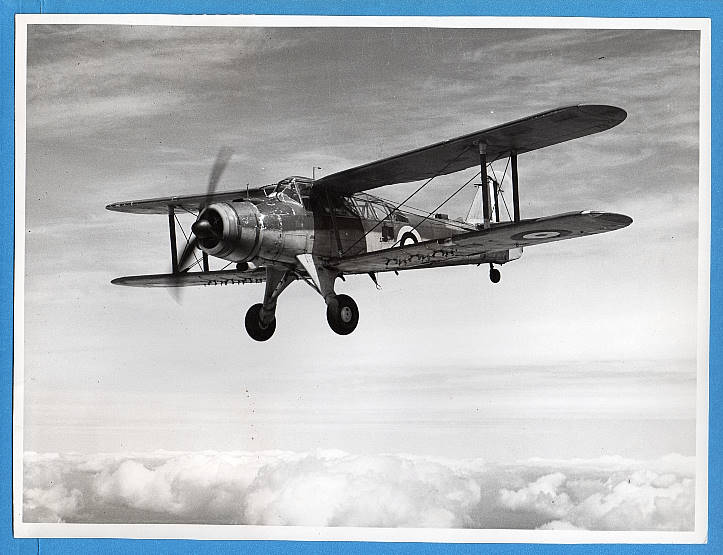
A wartime photo of the Fairey Albacore, aka "Applecore". Did Fairey build this aircraft at Heaton Chapel? Apparently not!! After World War Two the factory continued to build & refurbish Fairey aircraft, and also built some De Havilland Vampire jets. The last aircraft to be built at Errwood Park Works were Fairey Gannet MK1s. In 1960 aircraft production ceased and the company name changed to Fairey Engineering. They then built structures for the growing nuclear power industry. The Fairey Delta 1
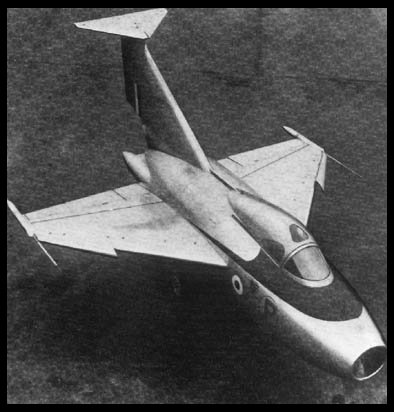
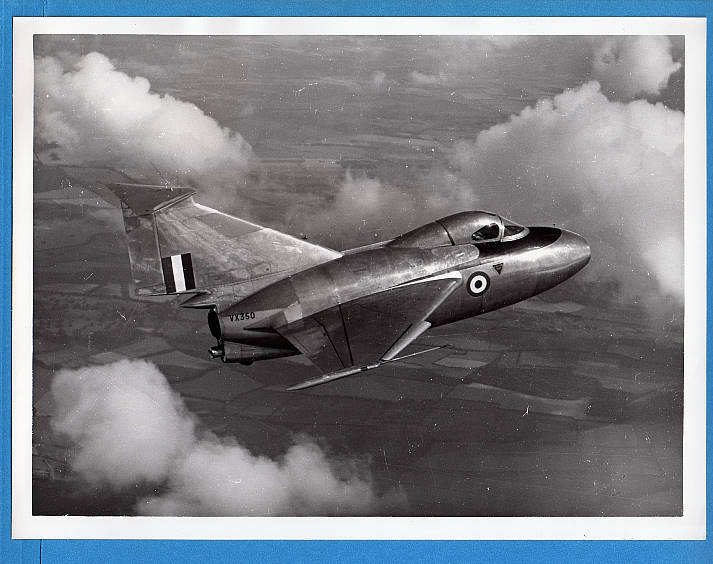
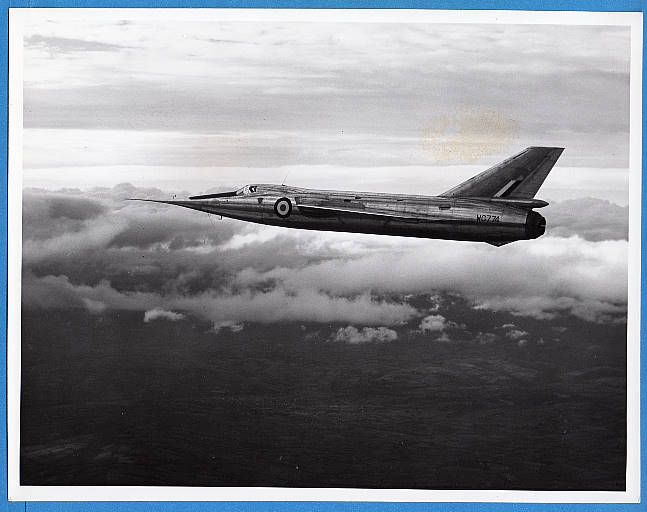
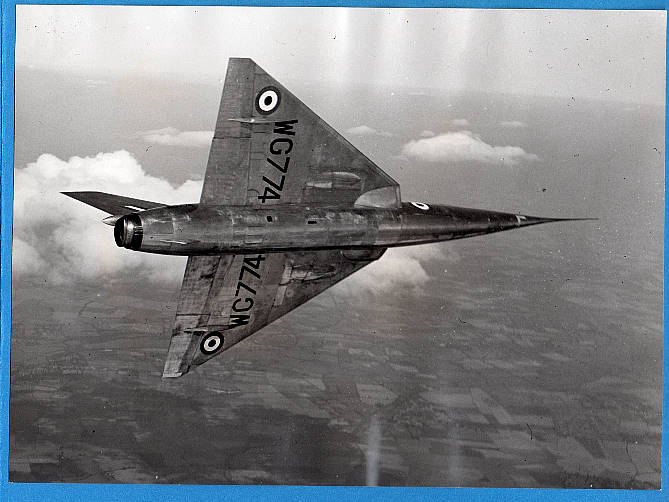
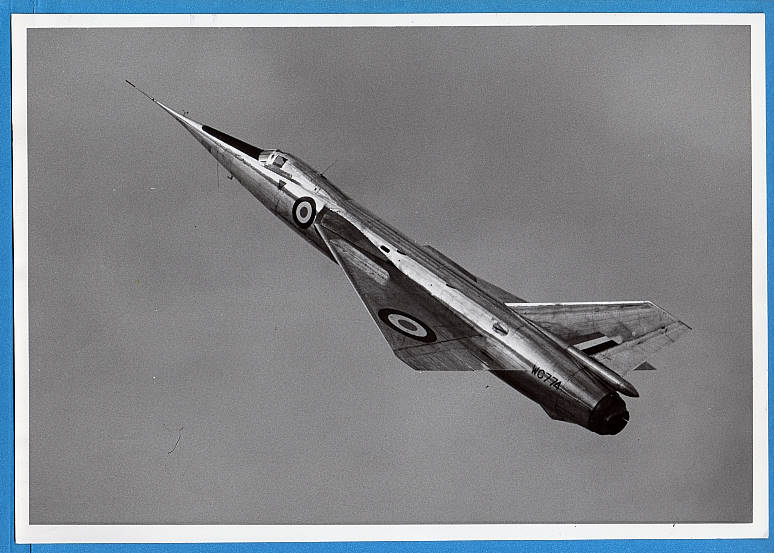
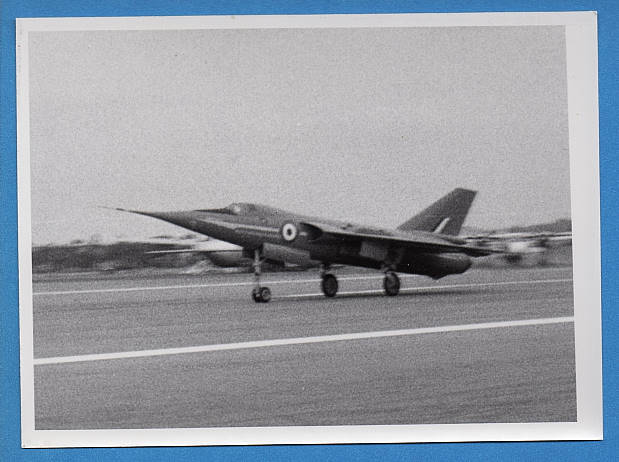
The above photo shows the single Fairey Delta 1 VX350, built at Heaton Chapel in 1951. A developed version of this aircraft the FD2 ,of which two versions were built at Faireys Hayes, Middlesex factory, went on to break world speed records flown by Peter Twiss. The FD2 would also be used to help in the development of the BAC/Sud Aviation Concorde.
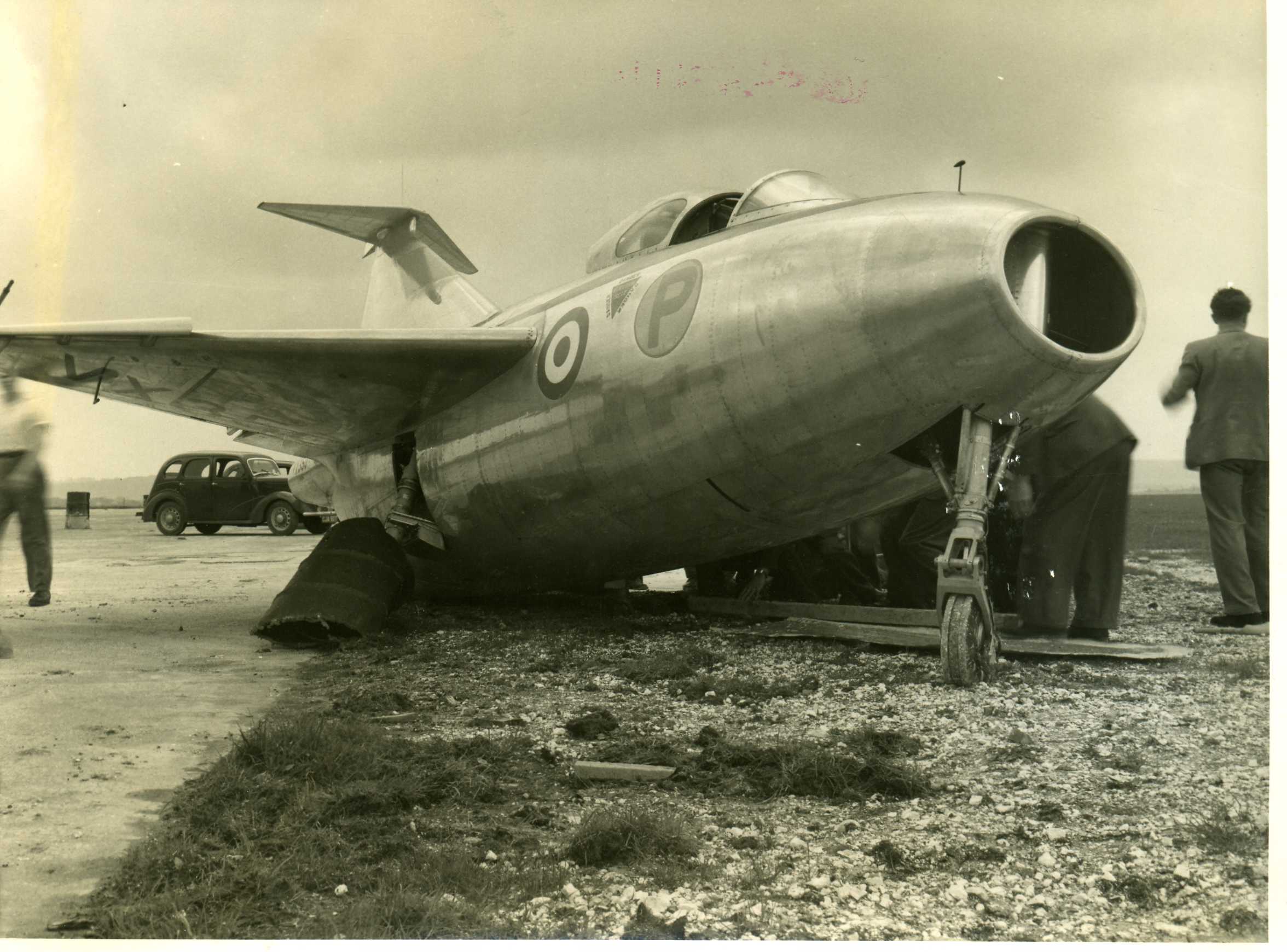
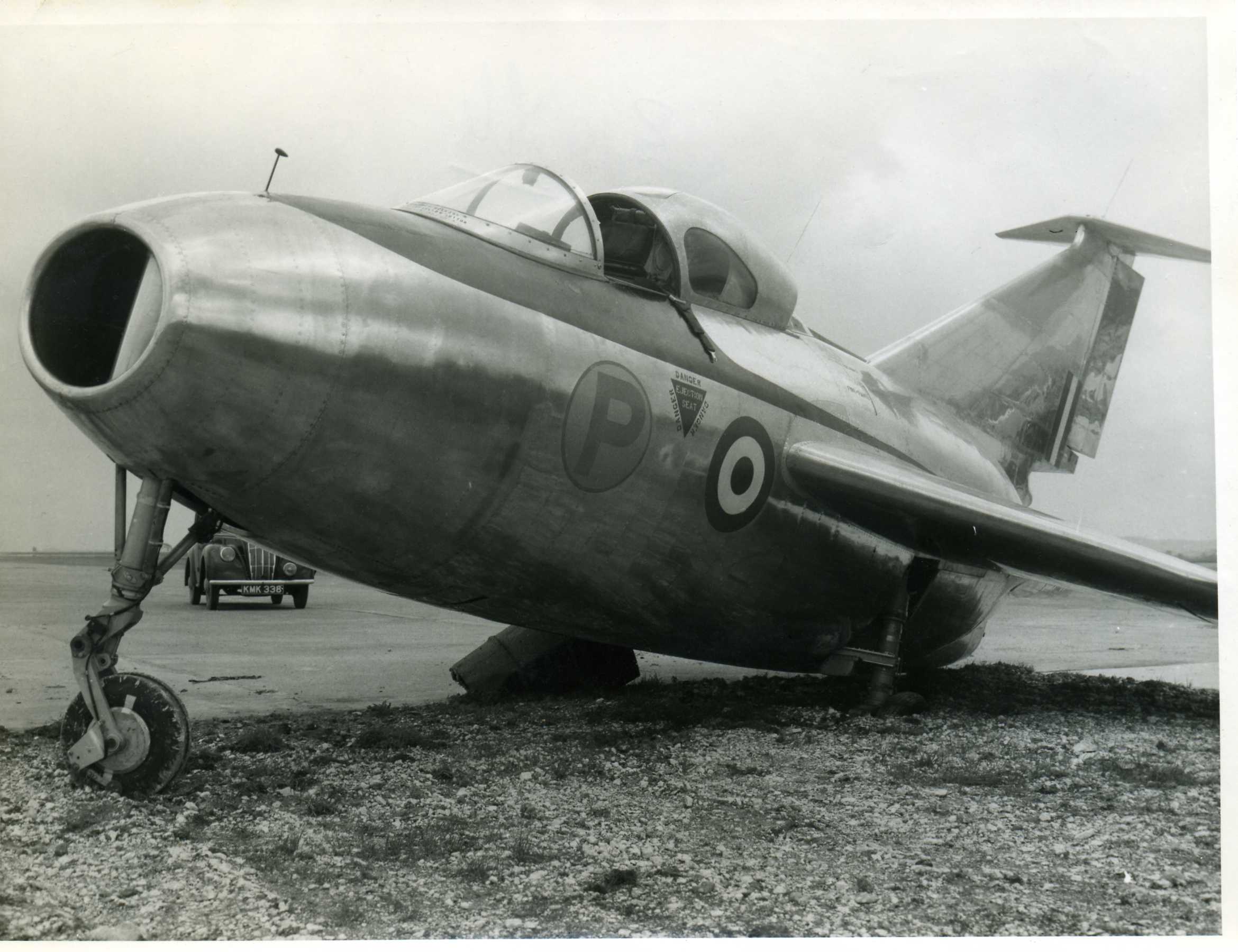
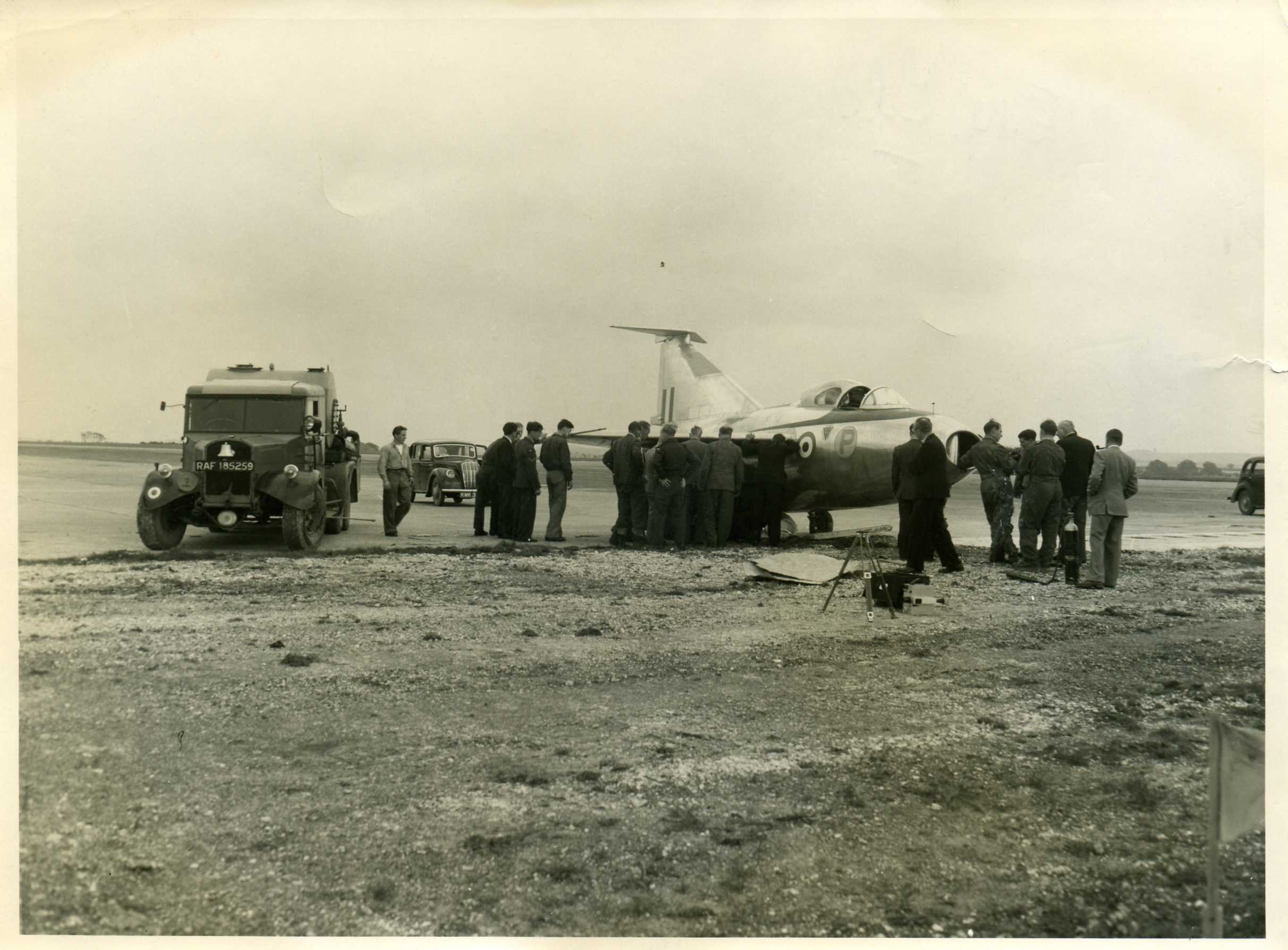
The three photos above show the Levenshulme/Heaton Chapel built Fairey Delta FD1 after an accident at RAE Boscombe Down. It looks like the undercarriage failed! Does anyone know the date of this accident? Probably 1951 or 1952. ( photos via Absolute Astronomy)
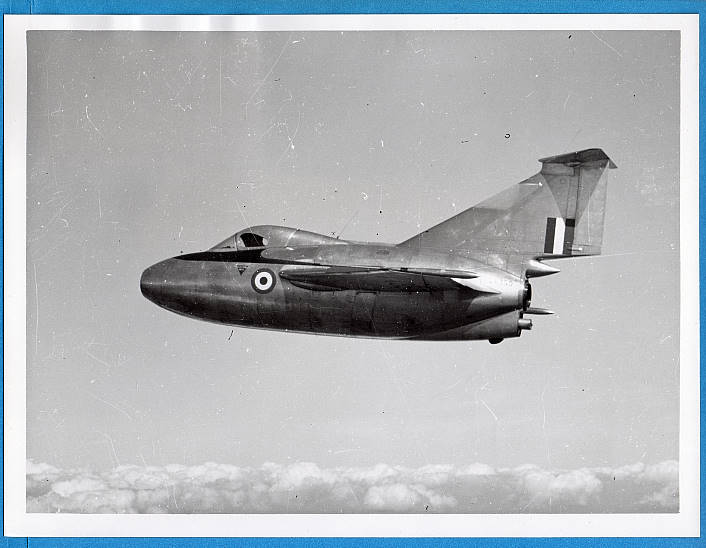
The two images above of the FD1 were found on Ebay. Nice in-flight studies of this rare aircraft. These are probably official MOD photos taken on a test flight out of Boscombe Down in 1951-52. (via Ebay)
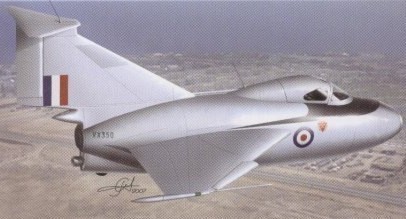
This interesting illustration was commissioned to advertise the model shown below
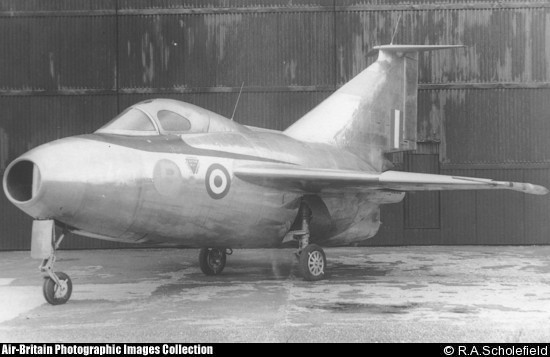
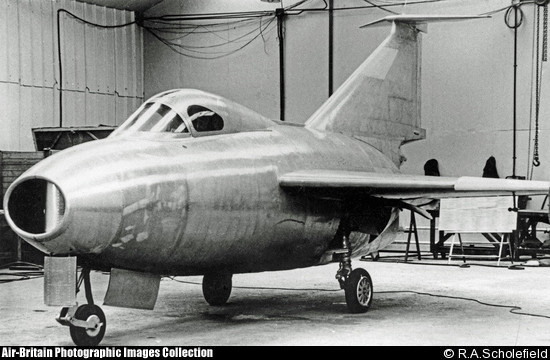
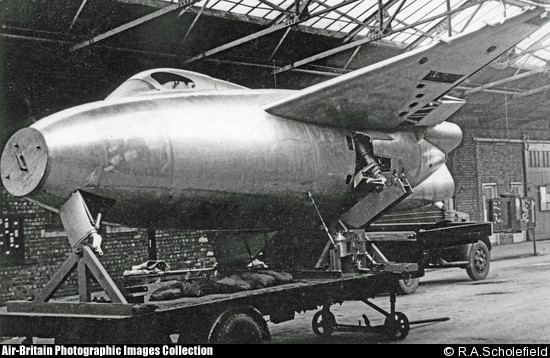
This large scale wooden desk-top model is hand carved in the Phillipines. It is one of a series of wooden models of famous aircraft that can be found in aircraft museum shops worldwide. Why they would model such an obscure aircraft as the FD1 is anybodies guess!! ( via Ebay, where it is currently on sale, June 2010) Update June 2011:- I have recently been informed that this model was commissioned by Dave Meikle for his fathers 70th Birthday. Dave's father worked at Fairey Aviation in Heaton Chapel. Dave lives in Stockport and runs a business called Delta Resins Ltd. The three following photos were found on the Air Britain website. The first two show the Fairey FD 2 after assembly at Ringway Airport. The third photo shows the FD 2 under assembly at the Heaton Chapel factory. ( All photos Fairey Aviation via R A Scolefield)
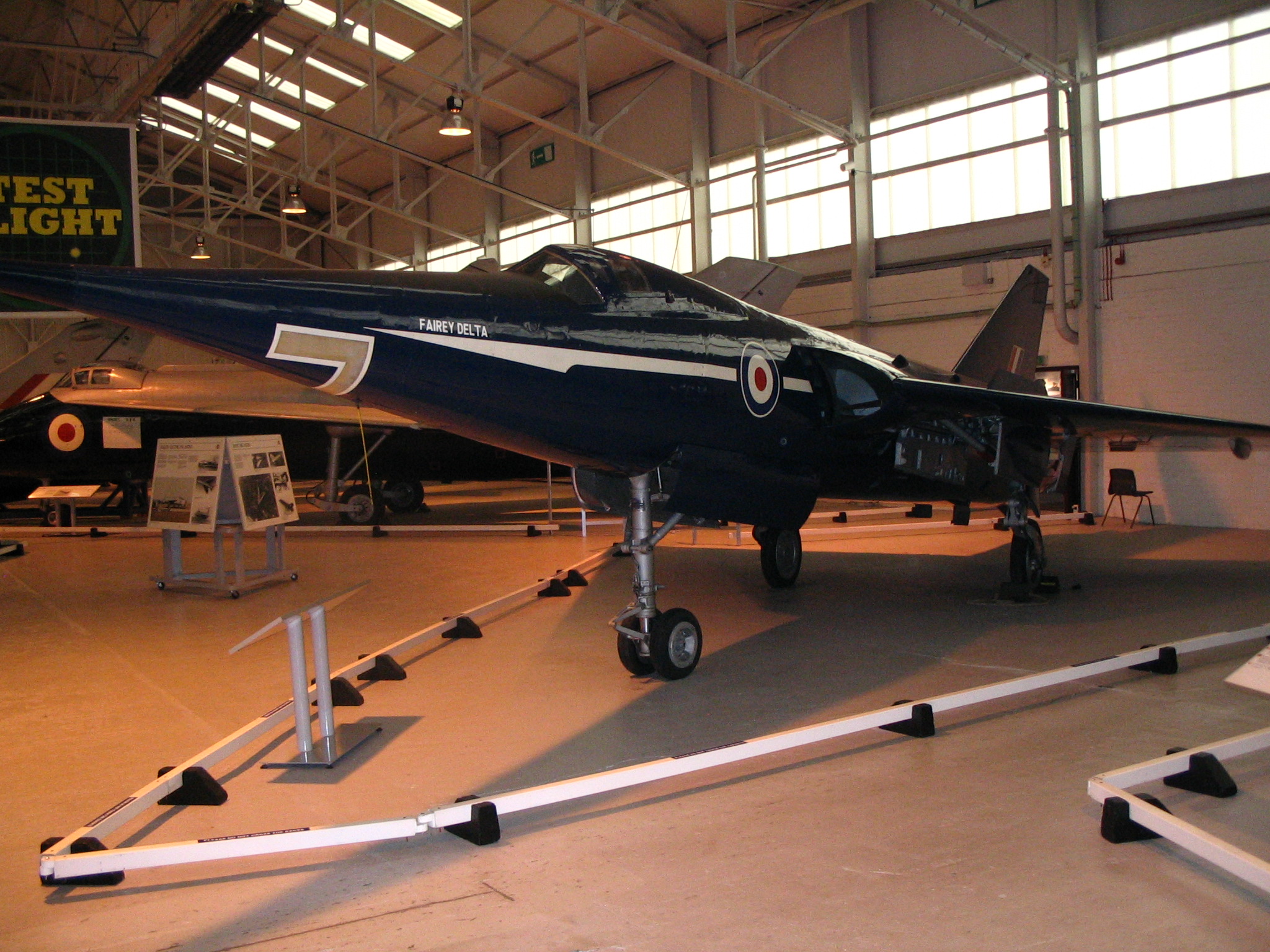
This is the Fairey Delta 2, preserved in the RAF Museum at Cosford. December 2007. It is quite different to the earlier FD1.Apparently parts of this aircraft were built at Fairey's in Heaton Chapel (George Nixon)
Three nice in-flight studies of Fairey Delta 2 WG 774. These are probably MOD photos taken during flight testing. (via Ebay)
This slightly grainy image of a Fairey Delta 2 appears to show a different colour scheme, similar to the Cosford museum aircraft. The photo was possibly taken at a Farnborough Air Show. (via Ebay)
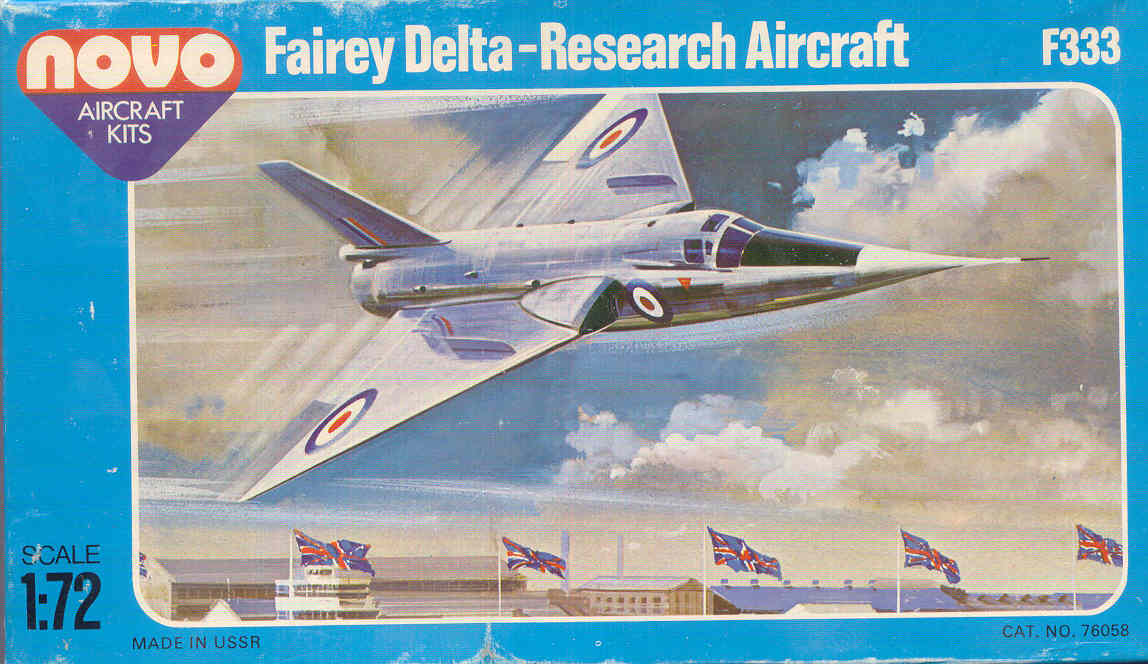
To my knowledge the only model kit ever released of the Fairey Delta 2. This was a Frog kit re-issued in the USSR. An obscure link to Heaton Chapel, but valid I think!! The Fairey Firefly
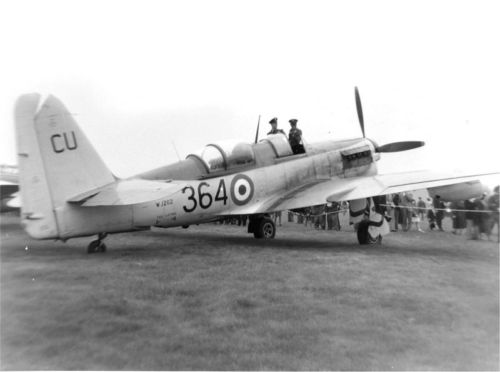
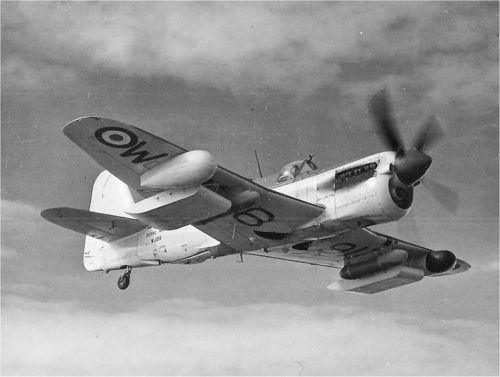
Two post WW2 images of Fairey Fireflies.
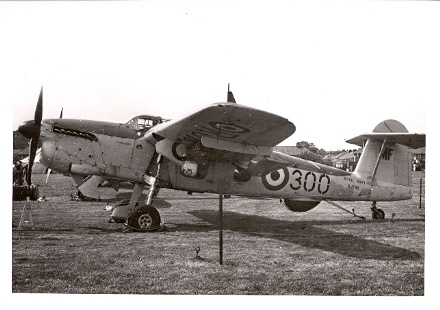
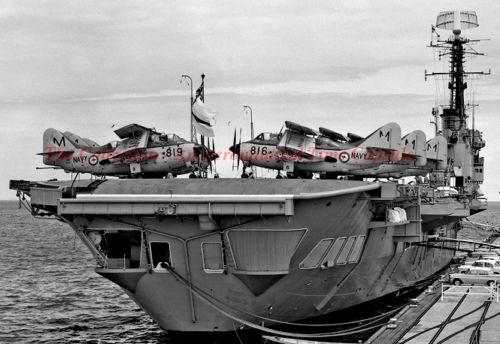
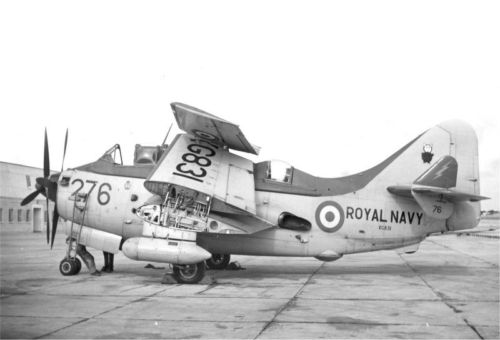
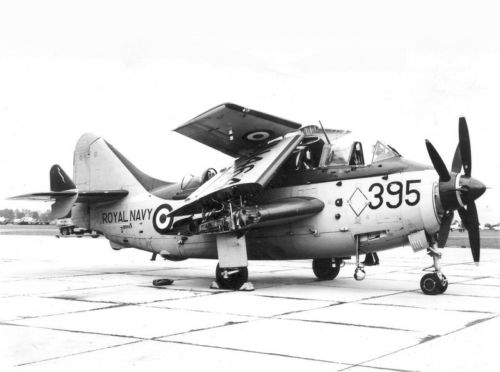
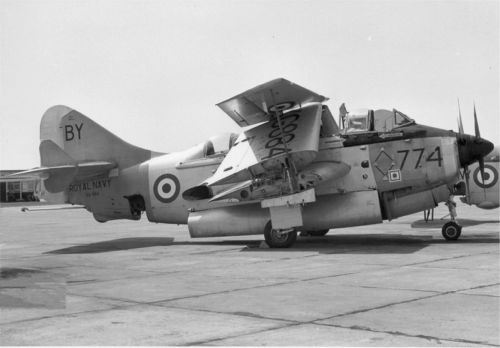
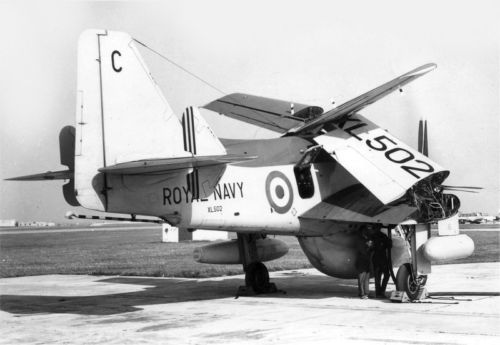
The Fairey Gannet The bulk of Fairey Gannet production was carried out at the Heaton Chapel Factory.
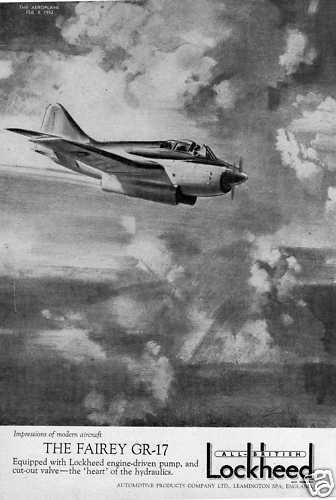
An early Gannet advertisement, for Lockheed valves, showing the aircraft as the Fairey GR17. Second photo shows Royal Australian Navy Gannets lined up on the deck of HMAS Melbourne in 1953.
A "flock" of Gannets. Various images found on Ebay.
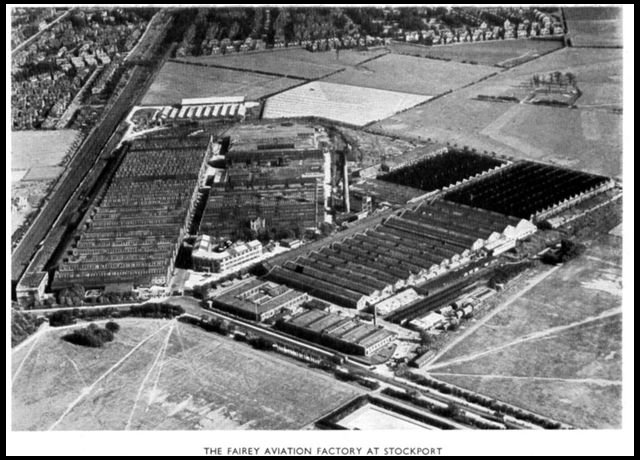
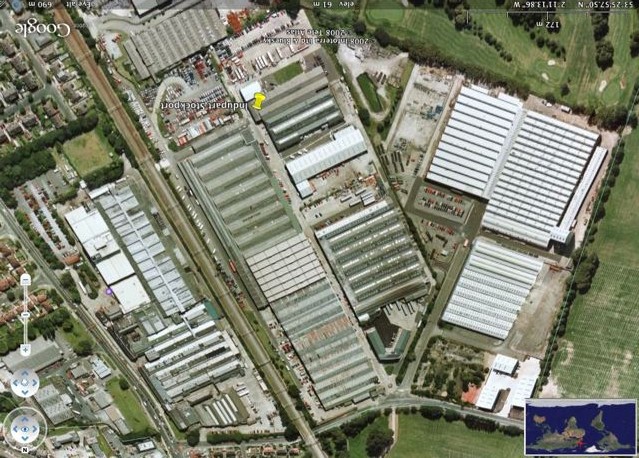
The above aerial view shows the Fairey Aviation factory on the boundary of Levenshulme & Heaton Chapel. This view could date from the period after World War Two. Note all the tracks on Errwood Park & Cringle Fields. Possible evidence of wartime activity. Can anyone shed more light on this? Were there Anti- Aircraft batteries or encampments on these fields? Also noteworthy the site of the Errwood Park swimming pool surrounded by trees. This view corresponds well with the map below. ( Photo via Ken Musgrave)
The Crossley Motors/Fairey Aviation/Bowaters/Crossley Park Works The Building next to the London Manchester Railway has had many uses over the years and is currently in use as an industrial park called "Crossley Park", referring to its original use building busses for Crossley Motors.
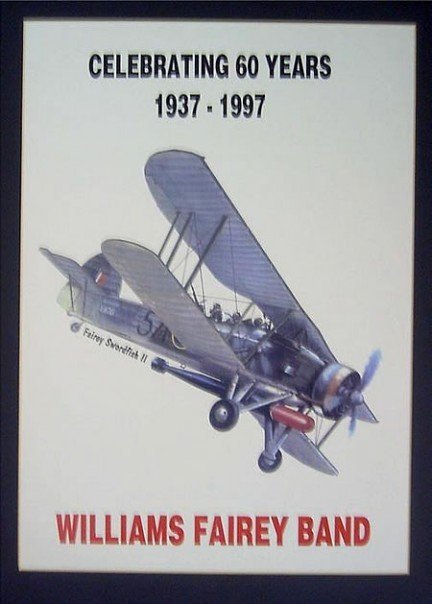
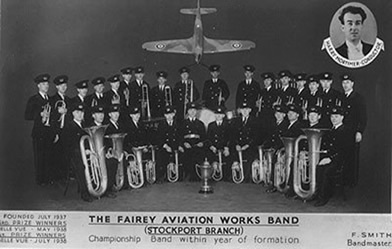
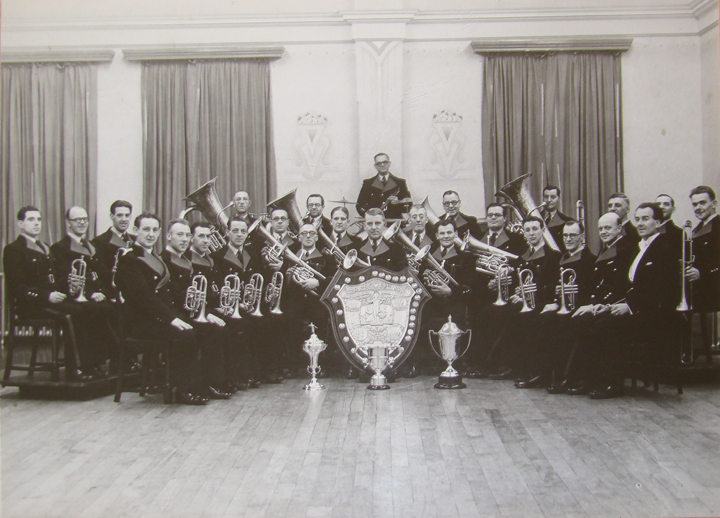
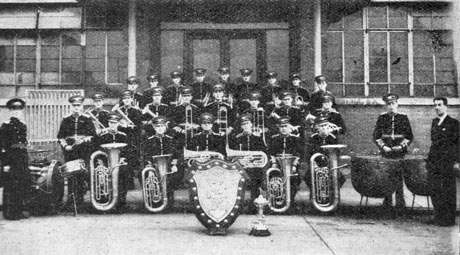
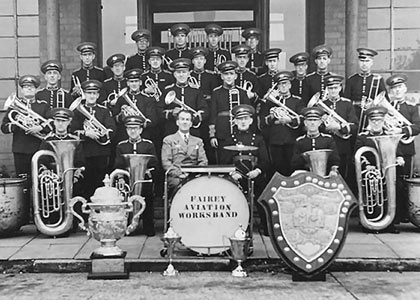
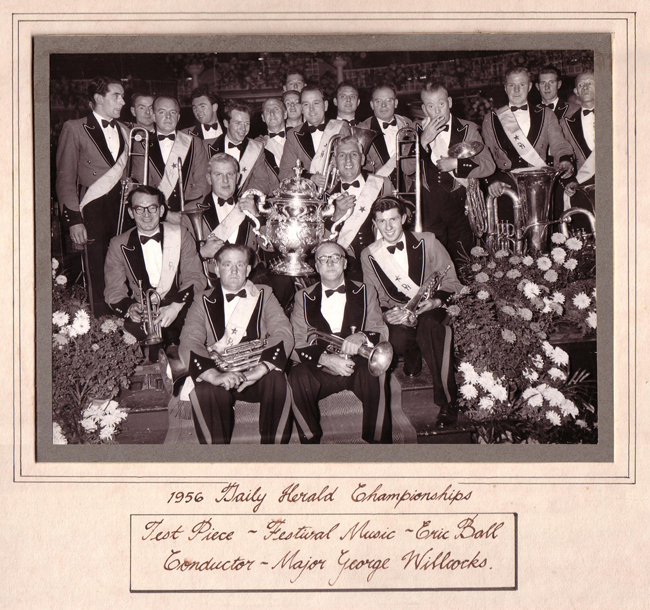
Fairey Aviation Brass Band/Williams Fairey Band Besides its famous aircraft designs Fairey Aviation also had a world renowned Brass Band. This was still operating in recent times, long after the Fairey name had disappeared from the company. I would be interested to hear more about this Brass Band. The Band is now known as The Williams Fairey Band.
The Fairey Aviation Brass Band was originally conceived at Heaton Chapel under the leadership of Harry Mortimer. The Fairey Swordfish was not built at Heaton Chapel
The Fairey Brass Band 1937.
The Band 1938. Note:- The Fairey Battle model. Bandmaster, F. Smith.
!940s Band. Location unknown.
Band 1943. Outside the Admin. Block?
Fairey Aviation Works Band. Same location as above?
Band1956. Daily Herald Championships. Did they win? Update June 2011:- Yes, they did!! Ian Gladstone, who played in the Fairey Band and is featured holding the Flugel Horn in the front row of the above photo, sent me a couple of photos of the band. Ian now lives in New Zealand.
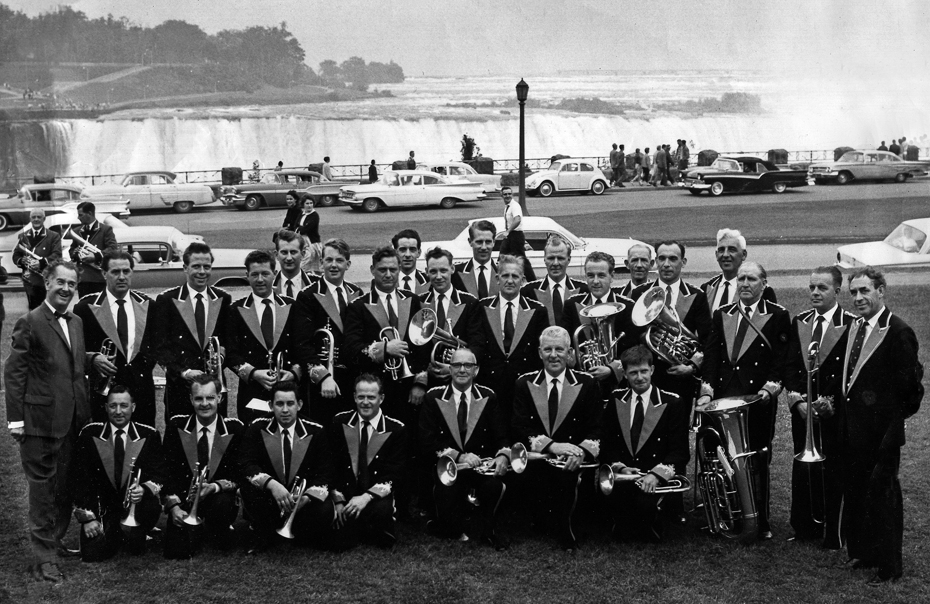
The Fairey Band at the Niagra Falls, Canada in 1961 ( via Ian Gladstone)
The Duke of Edinburgh visiting Fairey Aviation Heaton Chapel. What year was this?? Ian Gladstone appears in both the above photos. ( via Ian Gladstone)
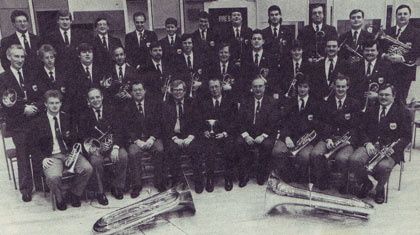
The Band in 1988.
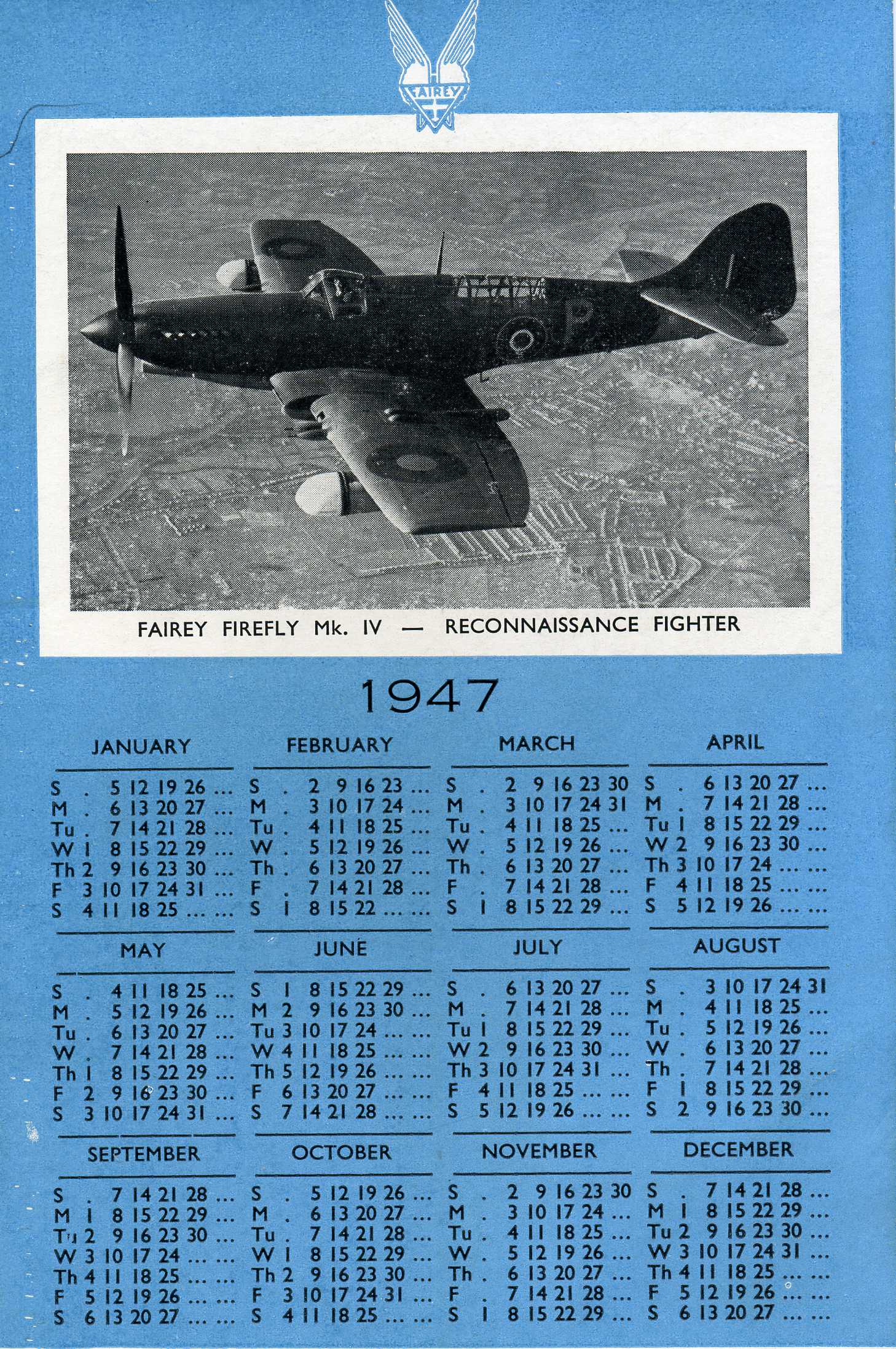
Fairey Company calender 1947
Fairey Company Christmas Card 1937
The two views above show the structure of the Belfast Hangar at Barton aerodrome. This building was very similar to the original aircraft factory buildings at Heaton Chapel during the First World War.
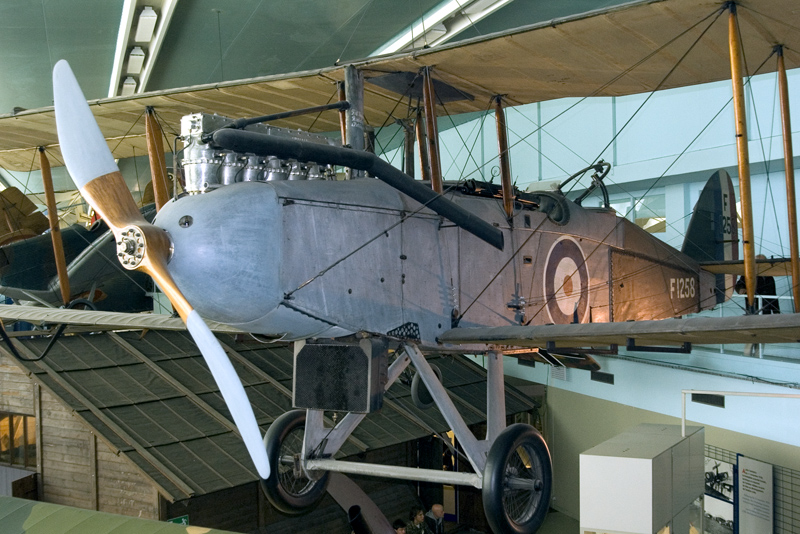
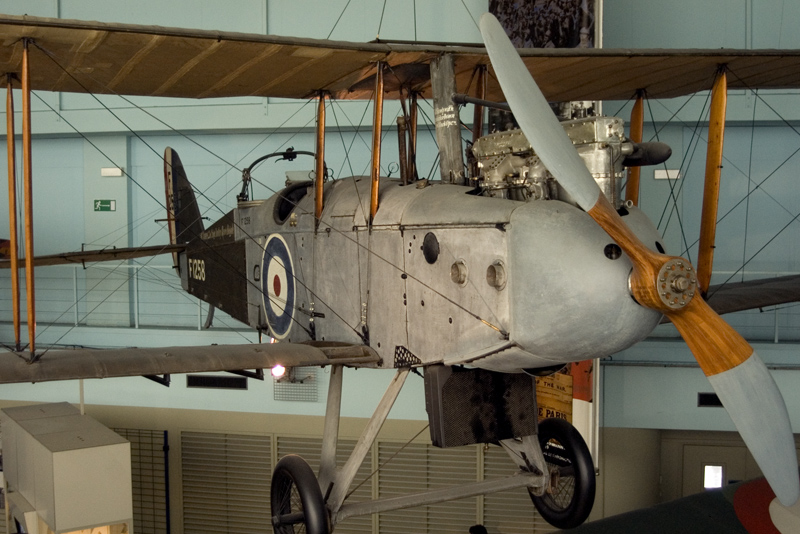
Surviving Aircraft Built At Heaton Chapel Musee De L'Air, Le Bourget, Paris France In the course of my researches I have discovered the oldest existing aircraft built at the Heaton Chapel site. This is the DH9A F1258, built at National Aircraft Factory, Heaton Chapel in 1918. Originally housed at the Musee De L'Air museum at Chalais Meudon near Versailles. It now hangs in the newer museum at the former Paris airport at Le Bourget. How it ended up in France I am not sure!
Two photos of DH9A F1258 hanging in the WW1 gallery at Musee De L'Air, Le Bourget, Paris, France.
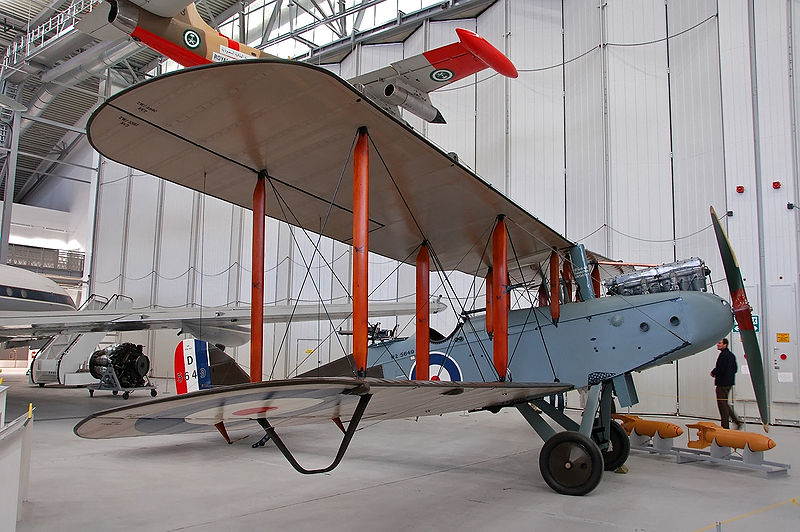
This is the only complete DH9A in the United Kingdom. Now on display at the Imperial War Museums Duxford museum.I do not know where this aircraft was built! RAF Museum, Hendon, United Kingdom
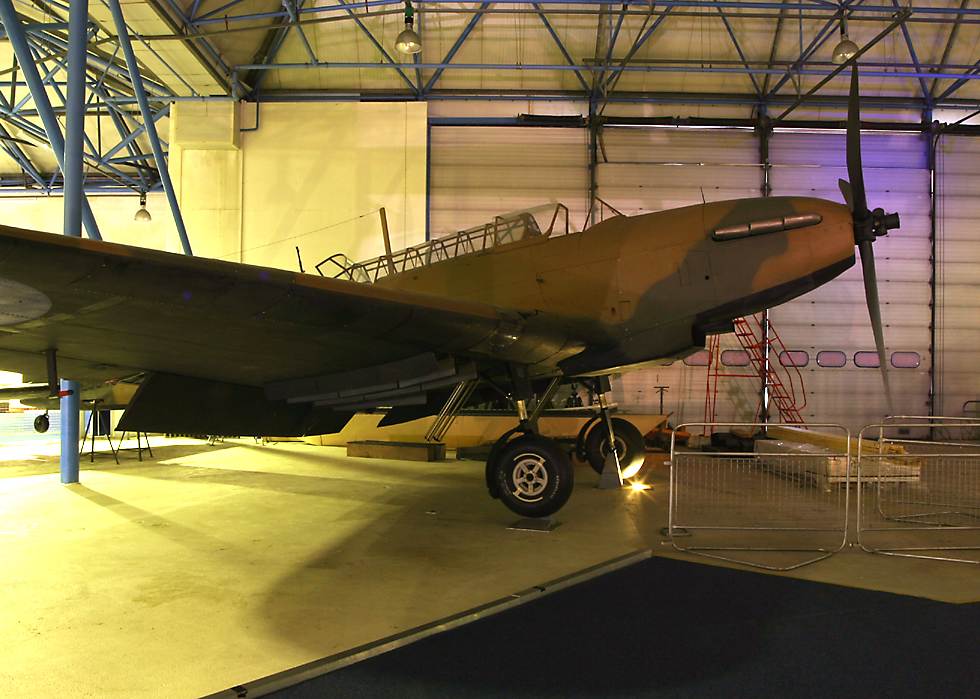
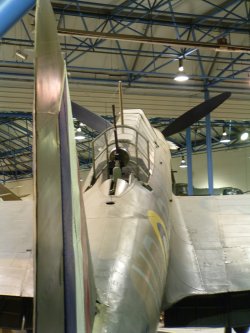
This Fairey Battle is exhibited at the RAF Museum, Hendon, in the "Battle Of Britain" Hall. Is this an Heaton Chapel aircraft?
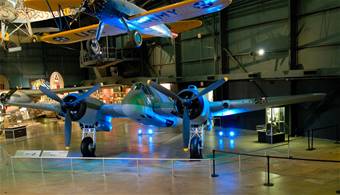
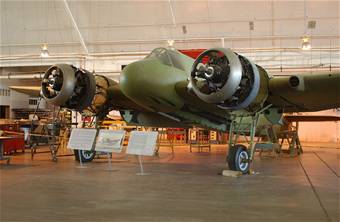
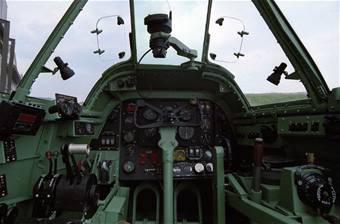
Another view of the RAF Museum Fairey Battle. United States Air Force Museum, Dayton, Ohio, USA. I recently discovered that a Bristol Beaufighter built at the Heaton Chapel factory now resides in the United States Air Force Museum in Dayton, Ohio, USA. This aircraft was built in 1942, and delivered to the Royal Australian Air Force. It is being restored to represent a Bristol Beaufighter Mk V1f operated by 415th Night Fighter Squadron USAAF in Europe during 1944. It in fact will be marked as the aircraft flown by Capt. Harold Augspurger when he shot down a Heinkel He 111 carrying German staff officers in September 1944. I do not yet know the original serial number of this aircraft or its place on the Fairey production line!
The above photos show the Beaufighter on site in the USAF museum. It is not yet complete, and is being worked on inside the museum. ( Photos by kind permmision of the USAF Museum) The Fleet Air Arm Museum. Yeovilton, UK. There are currently three Fairey Aviation survivors in the Fleet Air Arm Museum at Yeovilton. Two are unique as they are the only surviving examples of these aircraft in the world!
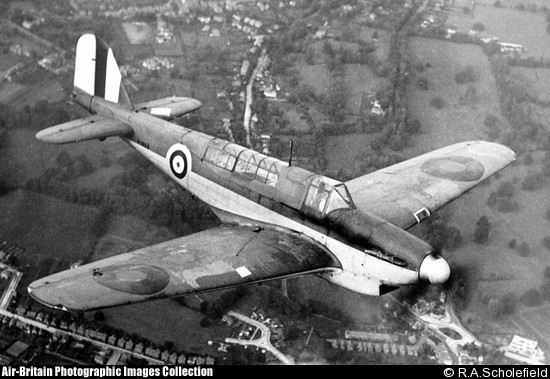
Fairey Fulmar (N1854) A two seat fighter. This is the only known existing example of this aircraft. It was built at Heaton Chapel in 1939( construction No. F3707) First flight 4th January 1940, piloted by Duncan Menzies. Flown to Boscombe Down, Wilts, on 5th May 1940 for trials and flown off HMS Illustrious. Returned to Faireys for conversion to Mk 11( Merlin 30 engine). No record of combat service. 13th July 1945 noted at RNAS Church Broughton. 29th July 1946 civilian registered as G-AIBE, and used as Fairey Aviation company hack during the 1950s. Repainted in camouflage June 1959. Ceased to fly 6th July 1959 when its Certificate of airworthiness expired. It was noted at White Waltham in 1961, still airworthy. Last recorded flight 18th December 1962 to RNAS Lossiemouth, Scotland, on return to the Royal Navy for preservation. Donated to the Royal Naval Museum FAAM on 22nd September 1972. This aircraft appears to have had a charmed life.
This photo shows a Heaton Chapel built Fulmar on a test flight in 1940. ( Via Fairey Aviation)
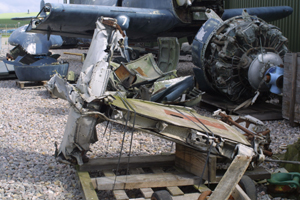
Fairey Barracuda 11 ( LS931) Recovered wreckage. A three seat torpedo and dive bomber. Built at Heaton Chapel in 1944. Construction No. 6688. 22nd August 1944 ready for collection at Ringway, Manchester. 2nd January 1945 operating from Ayr, Scotland with 815 NAS, Fleet Air Arm. Crashed into Beinn an Orr, Paps Of Jura. The Crew consisting Lt. Cdr. D. Norcock ( Squadron Commander), S/Lt.WM Moncrieff and PO LW Gurden all killed. 2000 The wreckage airlifted by 819 NAS Westland Sea King Helicopter to nearest road. Wreckage moved by road in December 2000. Now located at Yeovilton for possible restoration.
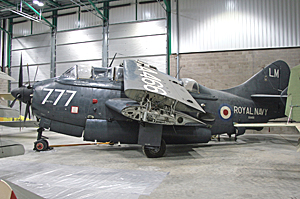
Fairey Gannet COD4 (XA465) This aircraft has had a long history with the Fleet Air Arm. Built as an AS4 at Heaton Chapel, Construction No. F9319. 28th March 1957 delivered to RNAS Athorn. In storage or preservation at Abbotsinch, Scotland 1957-1960.!4th May 1960 with 849 NAS at Culdrose. 19th April 1961 at RNAS Lee on Solent for modifications. 1963 used as courier aircraft onboard HMS Hermes. 18th December with Fairey Aviation at White Waltham for modernisation. 14th November 1964 converted at Lee on Solent to COD4 variant.( COD - Carrier Onboard Delivery).From this time on until its retirement in 1978 this aircraft served at various Fleet Air Arm bases, including Brawdy, Lossiemouth, and Lee on Solent. It also operated from HMS Eagle in 1969. Delevered by road to storage at Wroughton in 1987. !3th July 1999 delivered to NAS Yeovilton. On display in Cobham Hall ( Reserve Collection) since 6th April 2000.
An interesting photo of the sister aircraft to WG 777. Is this aircraft preserved? 1940 Squadron. Air Training Corps.
|
||
|
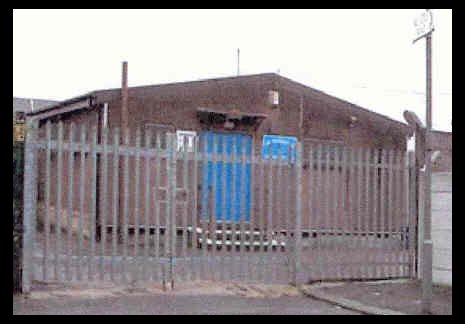
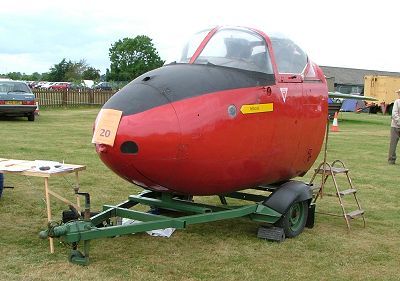
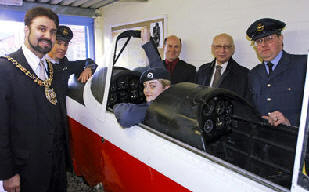
Another aviation connection in Levenshulme was 1940 Squadron, Air Training Corps. They had a hut & compound at the top of Mayfield Road. At one time they had several ex-RAF airframes which may have been on site in the compound. I would like to find out more about these aircraft & if they still exist. It is possible that a Hawker Hurricane & a De Havilland Tiger Moth airframes existed on site, as both these airframes were allocated to 1940 Squadron. Does 1940 Squadron still exist? Update:- 1940 Squadron ATC is still alive and kicking and currently has two aircraft. These are a DHC Chipmunk and a BAC Jet Provost. They are not complete airframes. Any history on these aircraft would be most appreciated. I have contacted the squadron on several occasions, but I have yet to receive any firm history of 1940 Squadron!!
The Original 1940 Squadron ATC hut, St Oswalds Road 1965. Ken Musgrave, who lived in Levenshulme & worked at Faireys has sent me some interesting information on 1940 Squadron. He writes:- "When 1940 was formed the HQ was situated over a shop directly opposite Chapel Street School, the first shop on the row. During the time there we had a Hurricane fighter to play with, and it was parked in the centre of Chapel Street playing fields. I left to join the army before the squadron moved to Mayfield Road. " Can anyone shed more light on the early days of 1940 squadron, or the fate of the Hurricane?
This photograph shows the current 1940 Squadron ATC Headquarters on Mayford Road. When was this built? It does not appear to be the one that I remember! Also the location looks different to how I remember it. ( Photo via Levenshulme Festival 2004).
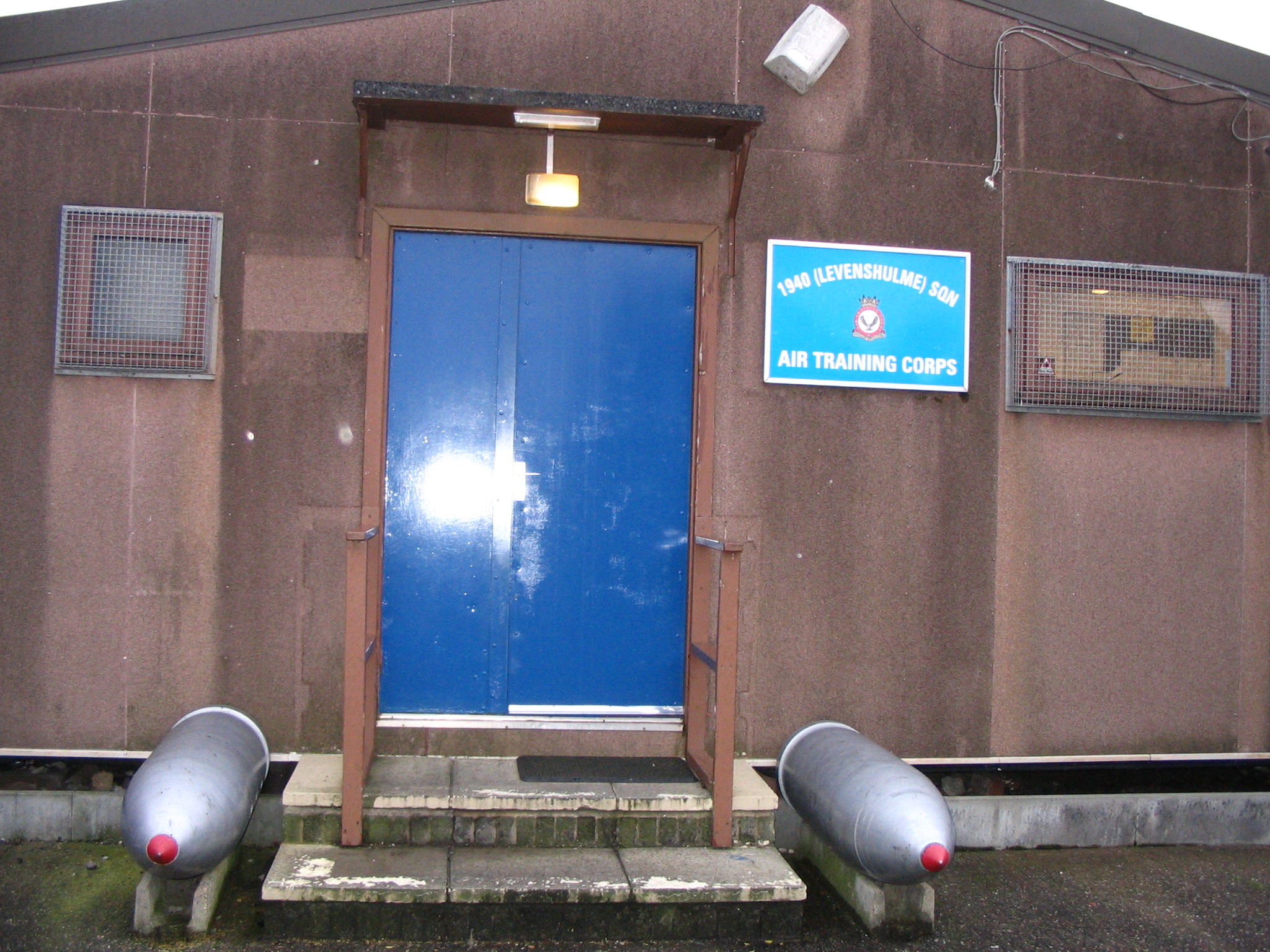
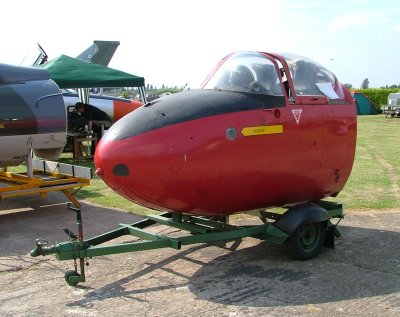
The Above photos show 1) The headquarters hut in December 2007. What are the "bombs" either side of the steps? 2) The BAC Jet Provost cockpit, owned by 1940 Squadron. This was taken at "CockpitFest" At the Newark Aircraft museum in 2006.
A similar view of the Jet Provost cockpit at another event.
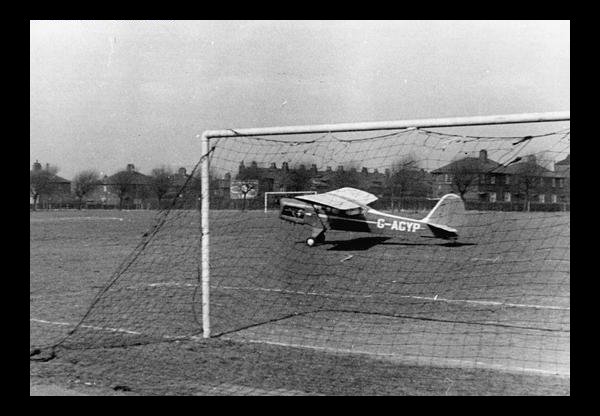
Photo taken during the hand over of the land used by 1940 Squadron ATC. The aircraft is a DHC Chipmunk. Mellands Playing Fields Airfield? In the early 1960's an Auster light aircraft made an emergency landing on the Mellands playing fields in North East Levenshulme. I am interested to find photos of this incident & when exactly it happened. Was this the first & last landing of any aircraft in the Levenshulme area?
This is the Auster on Mellands Playing Fields 1961. Apparently it had engine trouble while towing an advertising banner. The actual date of the incident was 14th April 1961. The aircraft was G-AGYP Auster Alpha J/1N c/n 2007, built in February 1946. The Aircraft was operated by Airviews Manchester Ltd and was being flown by its owner/operator pilot Mr Bruce Martin It is believed that The aircraft was exported at a later date. Its fate is not known.( Photo Brian Robinson) A Tenuous Levenshulme Aviation Connection!
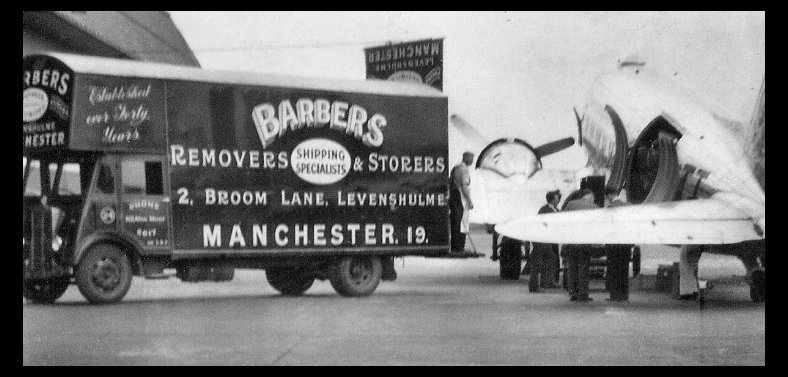
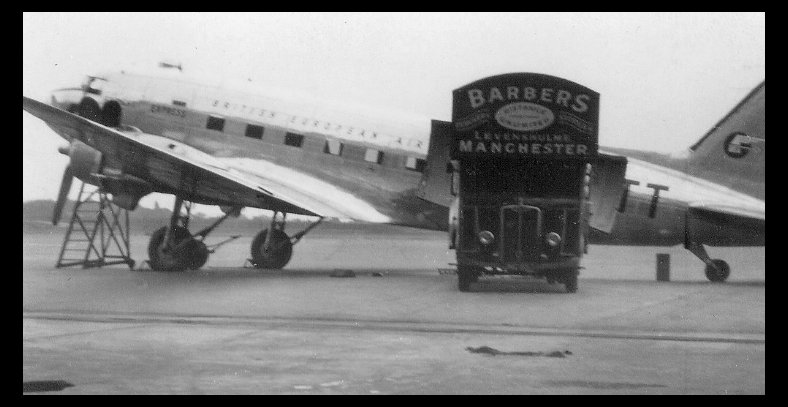
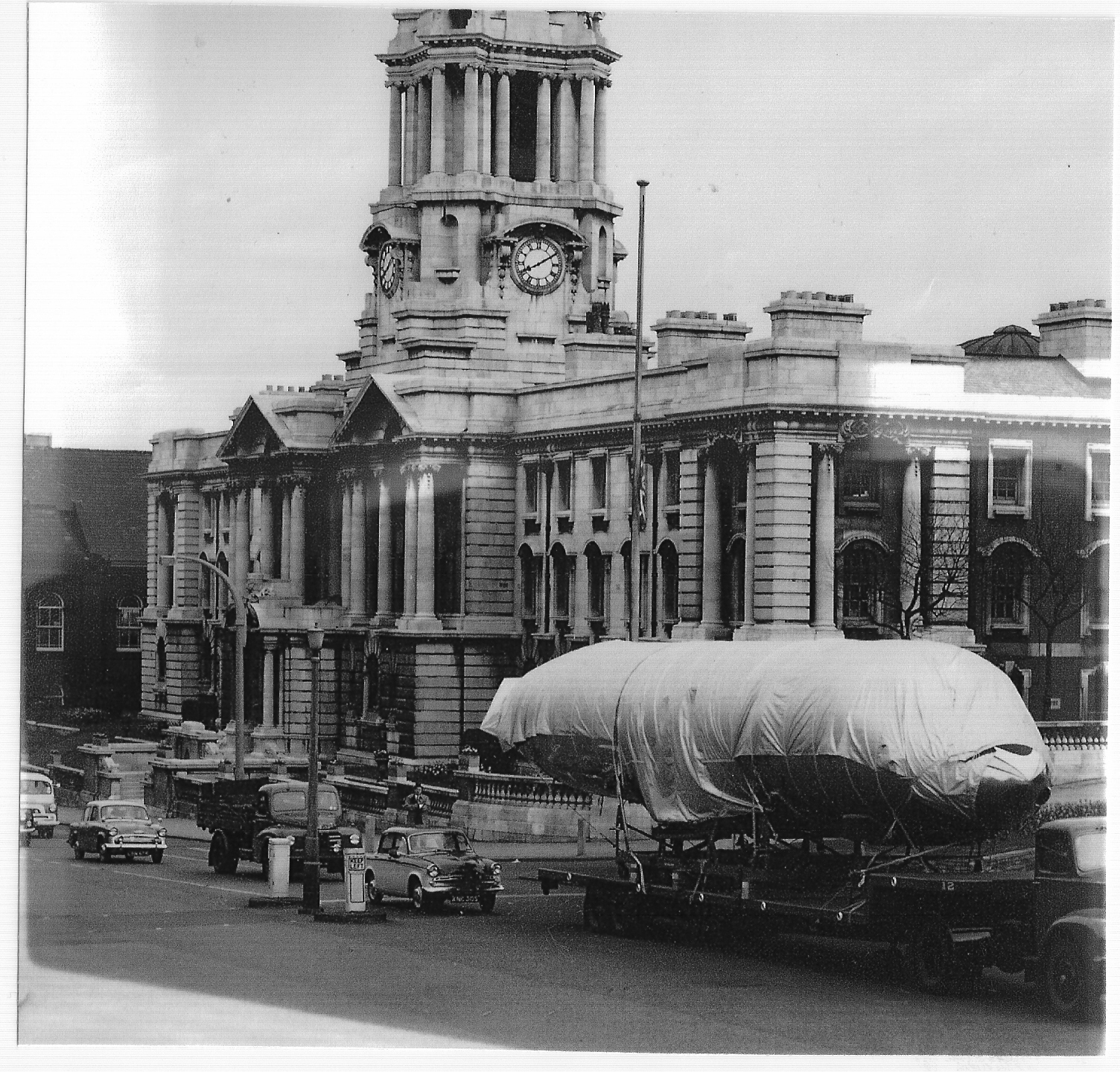
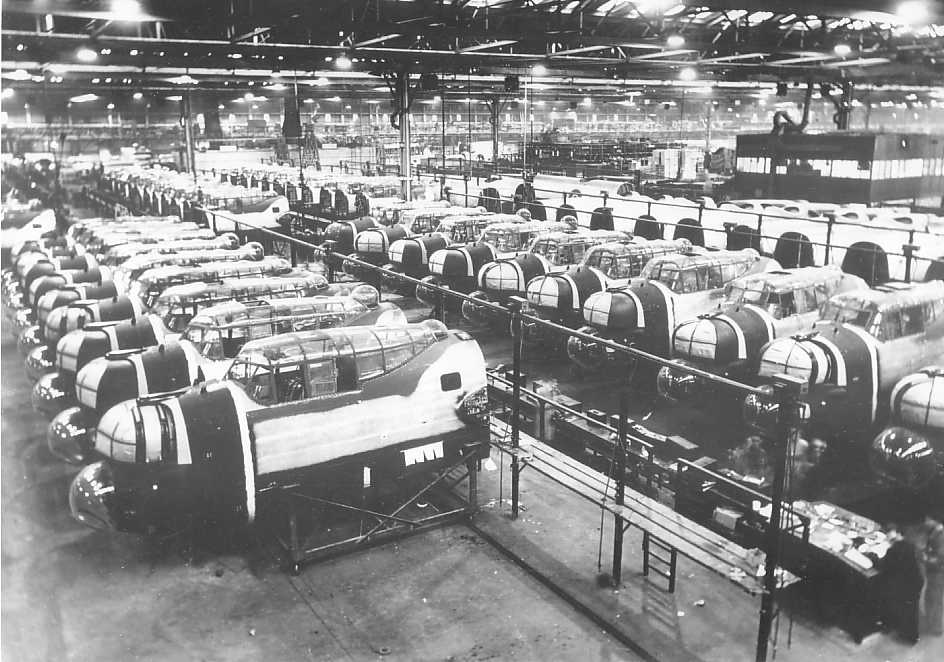
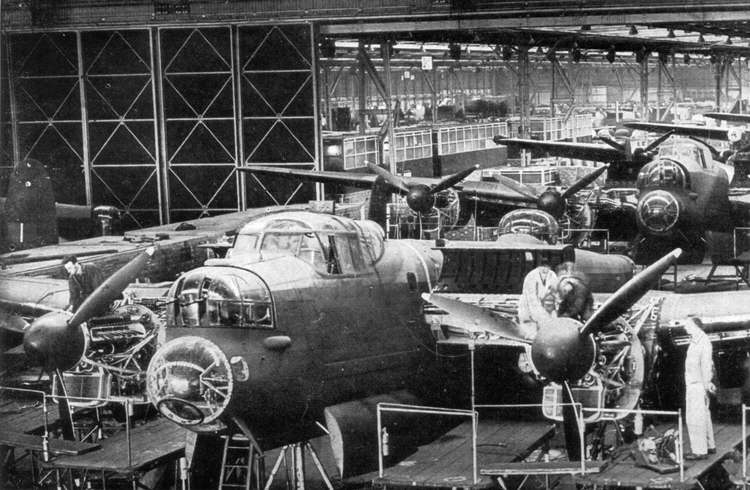
The two photographs above show a Barbers Removals van either loading or unloading from a DC3 at Ringway. From very brief research I have identified this aircraft as Douglas Dakota 3 Pionair G-ALTT " Charles Grey " The date would have been early 1950s, as this registration fits into the sequence used at that time. Note the early BEA title & logo. The aircraft is a freighter, and has an EXPRESS title. It is probably a converted C-47. Does anyone know the ultimate fate of this aircraft? Interesting to think that this photo was taken over 50 years ago, and yet DC3s are still operating today. Several hundred are still operating worldwide! The design is now almost 70 years old. What an achievement!! ( Photo via Andrew Barber ) Dakota G-ALTT went on to serve with Ethiopian Airways as ET-ABI, and was destroyed in a crash in 1965. The aircraft crashed at Gore, Ethiopia on September 14 1965. There were no survivors from the 17 passengers & flight crew. This aircraft was Construction Number 12000, on the Douglas production line. This information was supplied by my friend Colin Irving, and from the DC3 Hanger website. Sir Alan Cobhams Flying Circus 1930s I have come across several references to Alan Cobhams Flying Circus using farmers fields off Longford Road, Reddish, and giving flying displays & pleasure flights over the Levenshulme area. Ken Musgrave remembers one such visit in 1934-35, and states he watched the flying from the railway bridge on Longford Road. He thinks the cost of a pleasure flight was about "ten bob"! A princely sum in those days!! Does anyone have any memories or photos of these events. Another Tenuous Levenshulme Aviation Connection!! When I was a child living on Crayfield Road I occasionally witnessed aircraft fuselages on trailers heading south down Stockport Road towards Stockport. I always knew that they were Avro aircraft assemblies being taken from the Avro factory at Chadderton to the Avro Factory and airfield at Woodford. However I was always curious as to the route these large loads took to reach Woodford. I recently contacted Harry Holmes, who is well known as THE Avro historian and he confirmed the route for me. All the large aircraft parts, fuselage etc, were built at the Avro factory in Chadderton. They were then loaded onto low loader trucks ,Queen Mary's?, and driven via Belle Vue, Longsight, Levenshulme, Stockport and Poynton to the Woodford factory. Woodford was the main assembly plant. Woodford and Chadderton were both built before World War 2, and were already building Avro Ansons. At the beginning of the war they were developing the sadly underpowered Avro Manchester. The Manchester developed into the Avro Lancaster, the most famous British heavy bomber of World War 2. Over 3000 of the type were built at Chadderton, and all of these must have passed through Levenshulme!! Besides the Lancaster, Avro built the Lincoln, Vulcan "V bomber", Shackelton, Avro/HS 748, Andover, Nimrod, and sub assemblies for the HS 146.Also they converted many Handley Page Victor "V" bombers to tanker aircraft during the 1970s. Over the course of over 60 years many thousands of Avro aircraft must have passed through Levenshulme!
Not quite Levenshulme! This is the prototype Avro 748 fuselage passing Stockport Town Hall on its way to the final assembly sheds at Woodford. It would have passed through Levenshulme some 20 minutes earlier! The Avro 748 became the HS 748 when Avro became part of the Hawker Siddelly Group. The photo was taken in late 1959 or early 1960 (photo via Harry Holmes)
This is an early Avro advert showing the same aircraft, prototype G-APZV in flight. The first flight took place in March 1960.
This photo shows Avro Lancaster forward fuselages at the Chadderton Factory. Most of the huge Chadderton factory has been demolished within recent years.
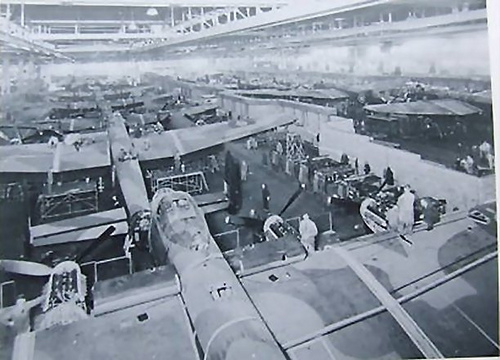
This photo shows Avro Lancasters in final assembly at the Woodford Factory. This is where the fuselages were mated to the wings, and engines, undercarriage and other assemblies were mounted on the aircraft.
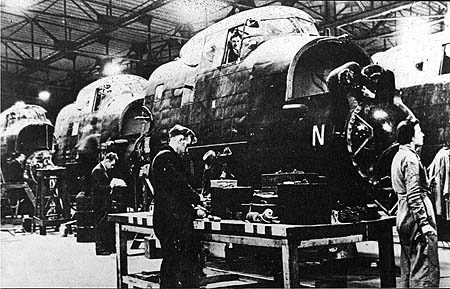
This photo was taken at Chadderton, and shows the forward fuselage assembly of Lancasters. Note that the individual aircraft code, N for Norman, is shown on the nearest assembly.
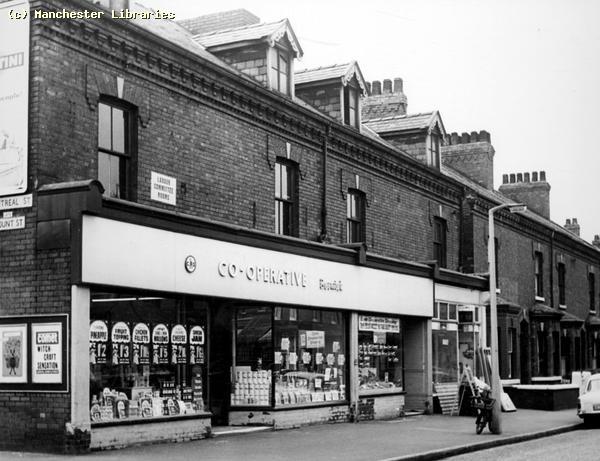
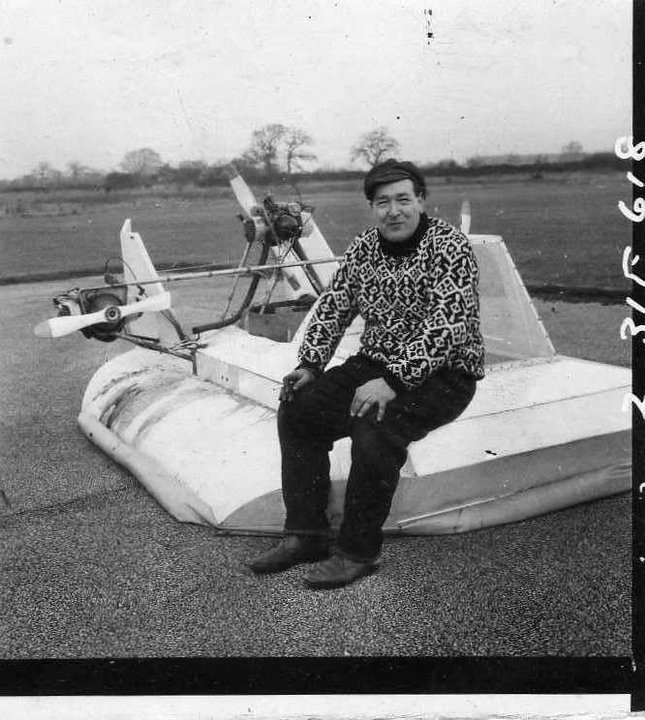
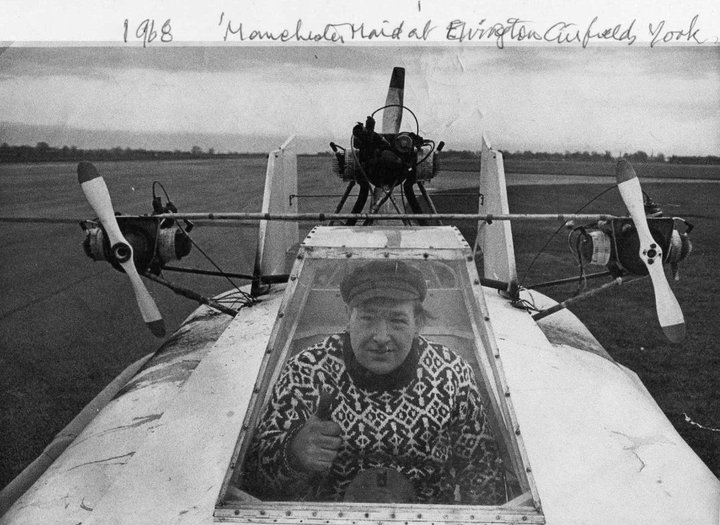
Final assembly, probably Woodford. George Armitage. Levenshulme Homebuilt Hovercraft Pioneer. ( Yes, Hovercraft are aircraft!!) George Armitage was my dentist in the 50s, 60s and early 1970s. He had a dental surgery on Albert Road, and he may have lived on the premises. In his spare time he built and flew small homebuilt hovercraft. I believe that he originally built these craft in the cellar of the Albert Road premises, but eventually he rented part of the old Beswick Co-operative Society's store on the corner of Barlow Road and Dunstable Street as The Levenshulme Hovercraft Works. I do not know how many hovercraft George built, but the three that I have been made aware of are as follows:- 1) "Tadpole", 2) "Manchester Maid", 3) "Mancunian 2" ( This last one suggests that there was perhaps a "Mancunian 1" ) The " Manchester Maid" at one time held the World Speed Record for light hovercraft around about 1968. Apparently George moved into the former Beswick Co-operative store on the corner of Barlow Road and Dunstable Street where he set up the Levenshulme Hovercraft Works in 1968.
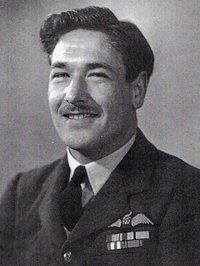
Cecil George Armitage. Dentist and Aviator I have just been contacted by Robin Armitage, The son of George Armitage. He tells me that he has many photos of his father, including ones of Georges hovercraft exploits. George was also an RAF pilot during the Second World War and had many adventures including being shot down and taken as a prisoner of war in Italy. I hope to relate his story at a later date. There is also a recent Facebook page dedicated to the memory of George Armitage.
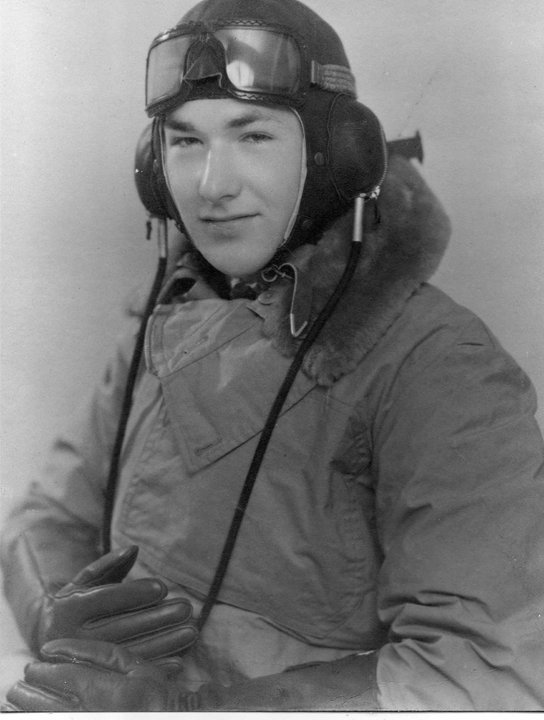
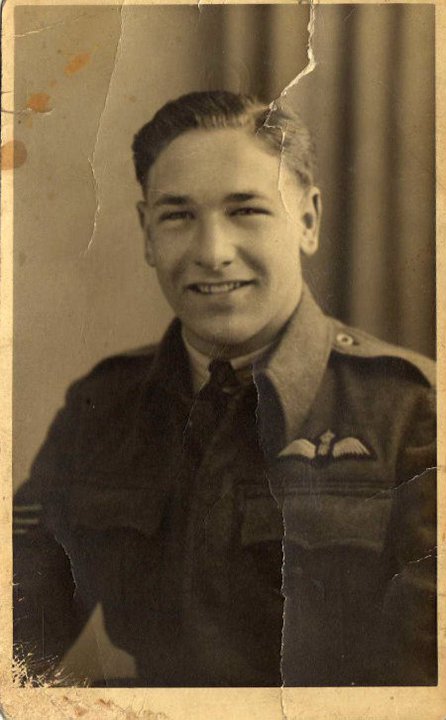
These two photos of George Armitage, borrowed from the Facebook page, show him during his RAF Service. The first taken during flying training, and the second some years later showing a more mature looking George with the regulation "clipped" RAF moustache and assorted decorations!
This photo of George Armitage would seem to fit in between the previous two! After he won his wings, but before the moustache!! ( All photos via Facebook)
George Armitage with the record breaking hovercraft "Manchester Maid". Elvington airfield, Yorkshire 1968.
George Armitage in the cockpit of " Manchester Maid". Note the 3 propellers, two pullers and one pusher!! What was the fate of this machine? Does it still exist? ( Both photos via Facebook) |

.jpg)

.jpg)
.jpg)
.jpg)
,QWBMDTjkKwjg~~_12.jpg)
e)NiBLsBeK1Ym!~~_3.jpg)
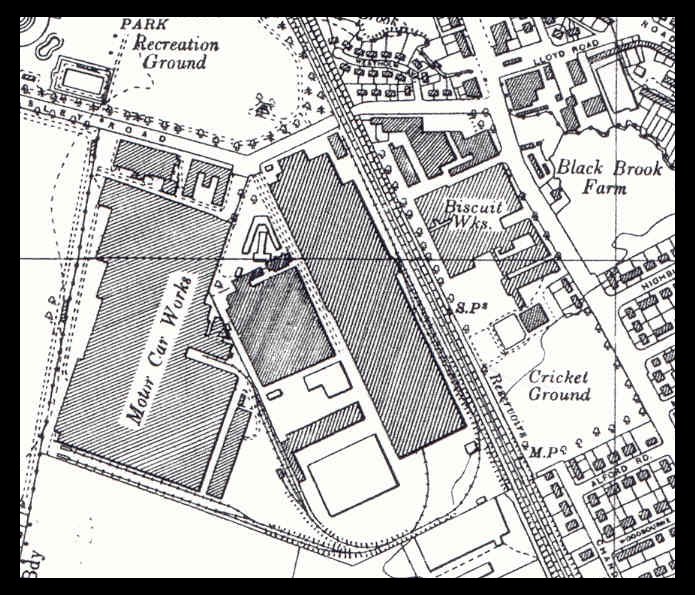 This 1956 map shows the extent of the Fairey Aviation complex at Errwood
Park Works. Note the extensive internal railway system & the fact that the
factory is still shown as "Motor Car Works"!
This 1956 map shows the extent of the Fairey Aviation complex at Errwood
Park Works. Note the extensive internal railway system & the fact that the
factory is still shown as "Motor Car Works"!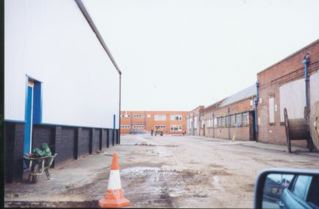
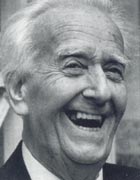 A
smiling Harry Mortimer. Date unknown.
A
smiling Harry Mortimer. Date unknown.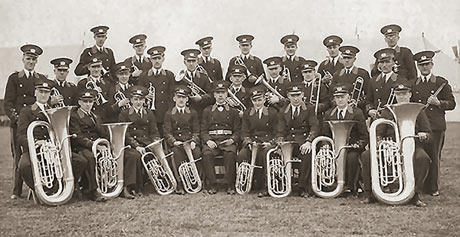
.jpg)
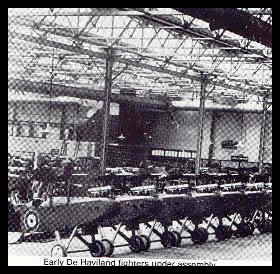 This photo shows DH 9 Bombers under construction at National Aircraft
Factory No 2, Heaton Chapel, during WW1.
This photo shows DH 9 Bombers under construction at National Aircraft
Factory No 2, Heaton Chapel, during WW1.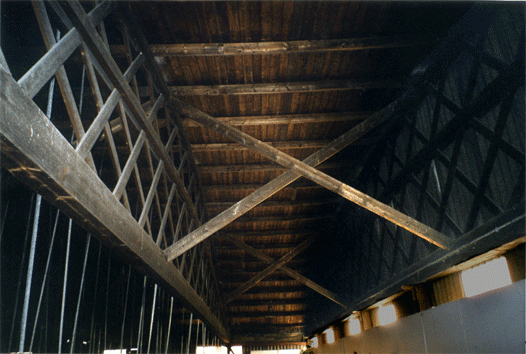
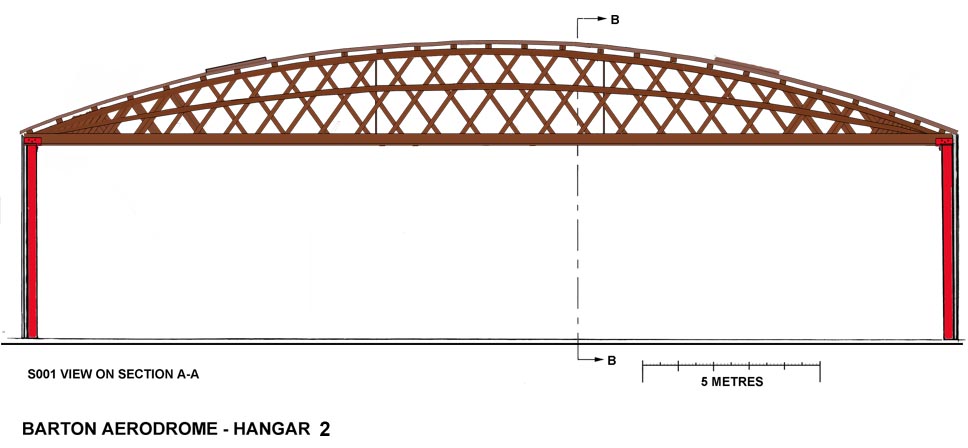
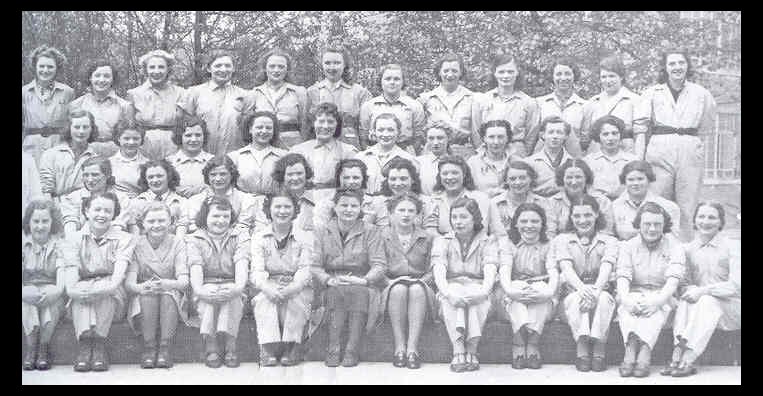 Photo taken at Errwood Park Works. 1940 .photo via Stockport Heritage &
Jim & Joan Doherty.
Photo taken at Errwood Park Works. 1940 .photo via Stockport Heritage &
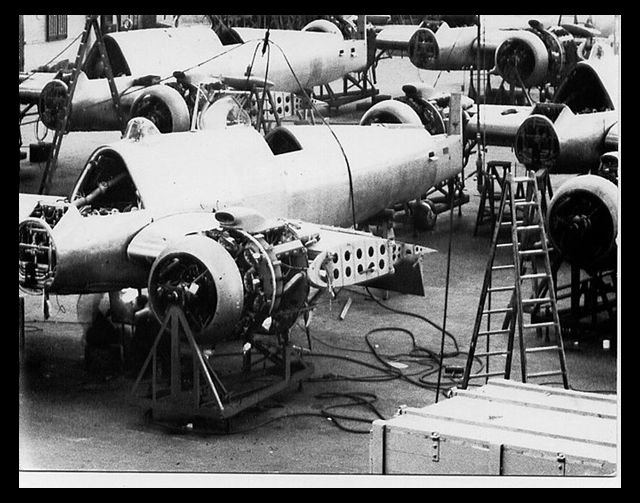
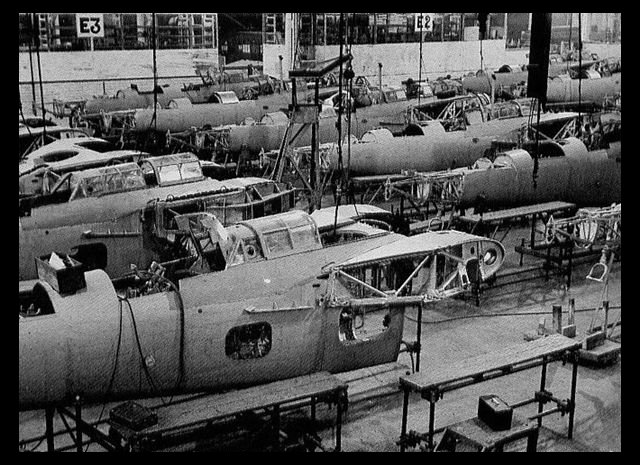
Jim & Joan Doherty.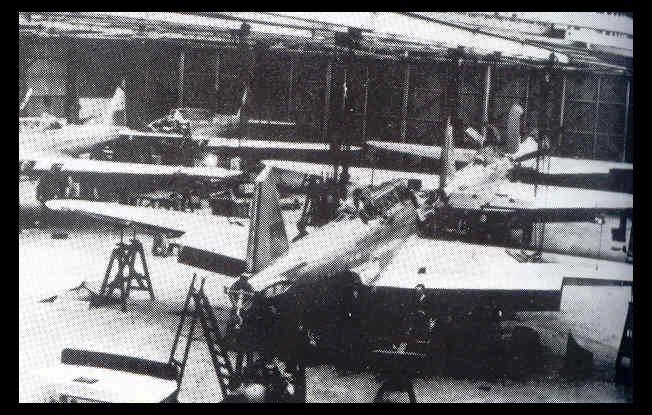 Fairey Battle Bombers being assembled at Errwood Park Works, early WW2.
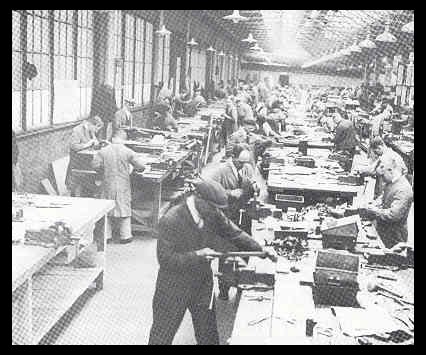 Fitting
Room at Fairey Aviation WW2.
Fitting
Room at Fairey Aviation WW2.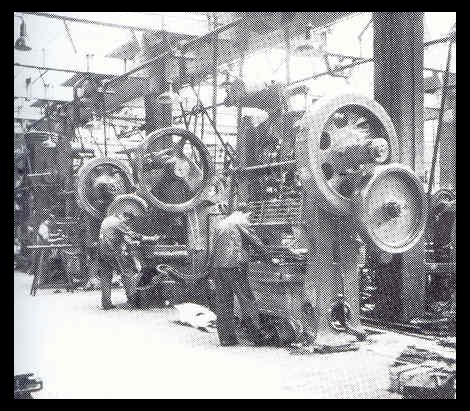 Press Shop at Fairey Aviation WW2. ( All above photographs via Stockport
Heritage Magazine)
Press Shop at Fairey Aviation WW2. ( All above photographs via Stockport
Heritage Magazine)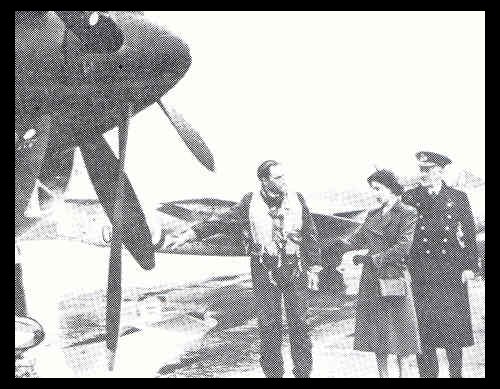 The Queen inspecting Fairey aircraft at Ringway, in the early 1950's.
(Stockport Heritage)
The Queen inspecting Fairey aircraft at Ringway, in the early 1950's.
(Stockport Heritage)